
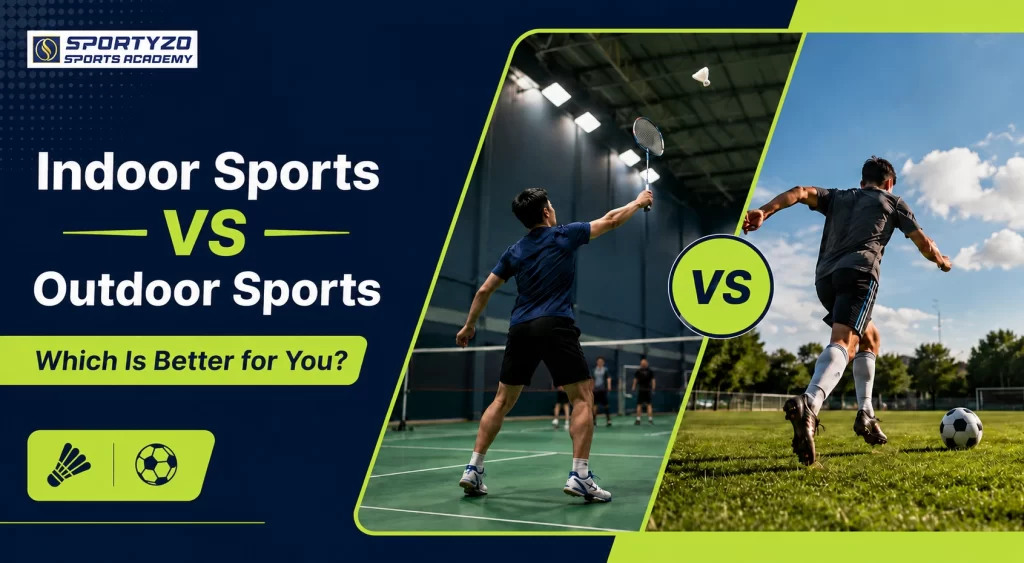
Sports play an important role in maintaining physical fitness, improving mental wellbeing, and building valuable life skills. Whether you enjoy a competitive game of badminton in an indoor arena or prefer playing football on an open field, every sport offers unique benefits.
One common question among students, parents, fitness enthusiasts, and athletes is whether indoor sports are better than outdoor sports. The answer isn’t as simple as choosing one over the other because both have their own advantages, challenges, and purposes.
In this guide, we’ll compare indoor and outdoor sports in detail, covering their benefits, differences, health impacts, skill development, and how to choose the right option based on your goals.
What Are Indoor Sports?
Indoor sports are games and physical activities played inside enclosed spaces such as gymnasiums, sports halls, indoor courts, and arenas. Since they are not affected by weather conditions, they can be played throughout the year.
These sports help improve fitness, coordination, concentration, agility, technical skills, and badminton reflexes and speed, making them ideal for players of all skill levels, with popular examples including badminton, basketball, table tennis, volleyball, squash, gymnastics, bowling, swimming, chess, and carrom.
What Are Outdoor Sports?
Outdoor sports are physical activities and games played in open environments such as parks, playgrounds, stadiums, tracks, beaches, mountains, and rivers. Since they take place outdoors, players experience natural weather conditions like sunlight, wind, and changing seasons.
Outdoor sports are excellent for improving stamina, cardiovascular fitness, endurance, teamwork, and overall physical health. Popular outdoor sports include cricket, football, hockey, athletics, tennis, cycling, golf, rugby, baseball, running, trekking, and mountain biking, making them ideal for people who enjoy active lifestyles and nature.
Indoor Sports vs Outdoor Sports: Quick Comparison
Feature | Indoor Sports | Outdoor Sports |
Playing Area | Indoor courts or halls | Open fields and stadiums |
Weather Impact | Minimal | High |
Physical Endurance | Moderate | High |
Climate Control | Yes | No |
Sunlight Exposure | Limited | Excellent |
Risk of Weather Cancellation | Very Low | High |
Fitness Level | Skill-focused | Endurance-focused |
Equipment Maintenance | Easier | Weather-dependent |
Seasonal Dependency | No | Often Yes |
Air Quality | Controlled | Depends on environment |
Benefits of Indoor Sports
Indoor sports provide a controlled environment that allows athletes to train without interruptions caused by rain, heat, or pollution.
1. Weather Doesn’t Affect Performance:
Indoor sports can be played throughout the year because they are not affected by weather conditions such as rain, extreme heat, cold, or strong winds. This allows athletes to practice consistently without interruptions.
2. Improves Skills and Coordination:
Indoor sports help improve hand-eye coordination, quick reflexes, balance, agility, precision, and concentration. These abilities are also essential tennis skills that help players perform better on the court.
3. Provides a Safer Playing Environment:
Most indoor sports facilities offer smooth playing surfaces, proper lighting, controlled temperatures, and professional flooring, creating a safer and more comfortable environment for players.
4. Allows Year-Round Practice:
Since indoor venues are protected from seasonal changes, players can train regularly throughout the year, helping them maintain consistency and improve their overall performance.
5. Ideal for Urban Areas:
Indoor sports are a great choice for people living in cities where open playgrounds are limited. Indoor courts and sports complexes make it easier to stay active and enjoy sports regardless of space or weather conditions.
Benefits of Outdoor Sports
Outdoor sports offer numerous physical and mental health benefits by combining regular exercise with fresh air, natural surroundings, and open spaces. They help improve overall fitness, build endurance, and contribute to a healthier lifestyle.
1. Improves Cardiovascular Fitness:
Outdoor sports such as football, including regular football practice drills, cricket, running, and cycling involve continuous movement, which helps strengthen the heart, improve lung capacity, boost blood circulation, and increase overall stamina.
2. Provides Natural Vitamin D:
Playing outdoor sports allows your body to absorb sunlight, which helps produce Vitamin D. This essential nutrient supports stronger bones, a healthier immune system, and improved muscle function.
3. Supports Better Mental Health:
Spending time outdoors while playing sports can reduce stress, improve mood, and promote mental wellbeing. Fresh air and natural surroundings also make physical activity more enjoyable and refreshing.
4. Burns More Calories:
Most outdoor sports involve activities like running, sprinting, jumping, and covering larger distances, helping you burn more calories and support effective weight management.
5. Builds Strength and Endurance:
Regular participation in outdoor sports improves stamina, strengthens muscles, enhances cardiovascular endurance, and helps the body adapt to different physical challenges over time.
Indoor Sports vs Outdoor Sports: Physical Health Comparison

Indoor Sports:
Indoor sports are best suited for improving balance, flexibility, agility, coordination, and quick reflexes. They help athletes enhance their technical skills while maintaining overall fitness. Popular examples include gymnastics, badminton, squash, table tennis, and volleyball.
Outdoor Sports:
Outdoor sports focus more on developing cardiovascular fitness, muscle endurance, weight management, and full-body conditioning. They involve larger playing areas and continuous movement, making them highly effective for improving stamina and overall physical health. Common examples include football, cricket, running, cycling, hockey, and professional tennis training at a tennis academy.
Mental Health Comparison
Both indoor and outdoor sports play an important role in supporting mental wellbeing, but they offer different psychological benefits based on the environment and type of activity.
Indoor Sports:
Indoor sports help improve concentration, sharpen strategic thinking, enhance focus, and develop discipline. Many indoor games require quick decision-making and precision, which can strengthen cognitive skills over time.
Outdoor Sports:
Outdoor sports help reduce stress, boost mood, increase self-confidence, and encourage social interaction. Spending time in fresh air and natural surroundings also promotes relaxation and contributes to better overall mental wellbeing.
Skill Development Comparison
Both indoor and outdoor sports help develop valuable life skills, but each focuses on different areas of personal and athletic growth.
Indoor Sports:
Indoor sports help improve precision, focus, reaction speed, technical skills, and quick decision-making. They require accuracy and concentration, making them ideal for developing discipline and mental sharpness.
Outdoor Sports:
Outdoor sports encourage leadership, teamwork, communication, adaptability, and problem-solving skills. Playing in open environments and team-based settings helps individuals build confidence while learning to work effectively with others.
Which Burns More Calories?
Generally, outdoor sports burn more calories because they involve larger playing areas and sustained movement. Approximate Calories Burned Per Hour
Sport | Calories |
Football | 600–900 |
Running | 600–800 |
Cricket | 350–600 |
Cycling | 500–900 |
Basketball | 500–700 |
Badminton | 450–650 |
Table Tennis | 250–400 |
Bowling | 200–300 |
Actual calorie burn depends on age, body weight, intensity, and duration.
Which Is Better for Weight Loss?
Both indoor and outdoor sports can help with weight loss, but outdoor sports generally burn more calories because they involve larger playing areas, continuous movement, and higher levels of physical activity.
Outdoor Sports:
Outdoor sports such as running, football, cycling, tennis, and hiking are highly effective for weight loss as they improve cardiovascular fitness while helping you burn calories and build endurance.
Indoor Sports:
High-intensity indoor sports like badminton—especially when practiced regularly at a badminton academy—along with squash, basketball, and swimming can effectively support weight loss by increasing heart rate, improving metabolism, and strengthening muscles when played regularly.
If your goal is to lose weight and improve overall fitness, combining both indoor and outdoor sports with a balanced diet and consistent exercise routine can deliver the best results.
Which Is Better During Different Seasons?
The best choice between indoor and outdoor sports often depends on the season and weather conditions. Choosing the right sport for each season helps ensure comfort, safety, and consistent performance.
Summer:
During extreme heat, indoor sports are usually the better option because they provide a cool and controlled environment. Sports like badminton, basketball, squash, and swimming are excellent choices for staying active without prolonged exposure to high temperatures.
Winter:
Both indoor and outdoor sports can be enjoyed during winter, depending on the local weather. While indoor games remain a comfortable option, outdoor activities such as running, football, cricket, and cycling can also be enjoyable in mild winter conditions.
Rainy Season:
Indoor sports are the preferred choice during the rainy season, as weather conditions do not affect gameplay. Playing indoors allows athletes to maintain their training schedule safely without interruptions caused by rain or slippery outdoor surfaces.
Indoor vs Outdoor Sports: Which Is Better for Athletes?
For athletes, choosing between indoor and outdoor sports isn’t about selecting one over the other—it’s about using both to maximize performance. Professional athletes often combine indoor and outdoor training to improve strength, endurance, technical skills, and overall fitness.
Indoor Training:
Indoor training helps athletes build strength, improve flexibility, enhance technical skills, and maintain a consistent practice routine regardless of weather conditions. Activities such as gym workouts, indoor court practice, and rehabilitation sessions also support injury prevention and recovery.
Outdoor Training:
Outdoor training improves stamina, cardiovascular fitness, speed, endurance, and adaptability by exposing athletes to real-game environments and natural conditions. It also helps players prepare for competitive matches while building mental resilience.
Overall, combining indoor and outdoor training provides the best balance, allowing athletes to enhance their physical conditioning, refine their skills, recover effectively, and perform at their highest level.
How to Choose the Right Sport
Choosing the right sport depends on your fitness goals, lifestyle, interests, and the facilities available to you. Both indoor and outdoor sports offer unique benefits, so the best choice is the one that matches your preferences and keeps you motivated to stay active.
Choose Indoor Sports If:
Indoor sports are a great option if you prefer a controlled environment, want to practice throughout the year, enjoy technical and skill-based games, live in a city with limited open spaces, or have restricted access to outdoor playgrounds.
Choose Outdoor Sports If:
Outdoor sports are ideal if you enjoy spending time in nature, want to improve endurance and cardiovascular fitness, aim for weight loss, prefer larger playing areas, or like engaging in activities that involve continuous movement and longer durations.
Start Your Sports Journey with Sportyzo
Looking to improve your skills? Sportyzo offers expert coaching for a wide range of indoor and outdoor sports with experienced coaches and structured training programs for all age groups.
Conclusion
The debate between indoor vs outdoor sports doesn’t have a single winner because each offers unique advantages. Indoor sports provide consistency, technical skill development, and year-round accessibility, while outdoor sports promote endurance, cardiovascular health, exposure to nature, and higher calorie expenditure.
The best choice ultimately depends on your goals, lifestyle, available facilities, and personal interests. If possible, incorporating both indoor and outdoor sports into your routine is the most effective way to enjoy comprehensive physical fitness, mental wellbeing, and long-term health.
Whether you’re playing badminton indoors or football outdoors, staying active consistently is far more important than where you play. The right sport is the one that keeps you motivated, healthy, and enjoying the game.