

Have you ever been to a football game and asked yourself why certain players are always in the right position and at the right time? Why do some players play so skillfully with the ball while others have difficulties even performing the easiest passes? The reason is very simple – they have developed the basic football skills that all footballers need.
Football does not only rely on talent but mostly depends on having the right skills and developing them on a daily basis. No matter whether you are an absolute beginner or have already been playing for some time, here is how you can develop your skills through these top 10 football skills. Let’s begin!
1. Ball Control & First Touch
Your first touch is everything in football. When you receive the ball well, you automatically have more time and more options. A bad first touch puts you under pressure immediately and makes everything harder.
How to practice it –
- Practice receiving the ball with both feet daily.
- Use a wall to pass and control the return ball.
- Work on controlling the ball with your chest and thigh.
- Focus on cushioning the ball softly on every touch.
- Practice first touch in different directions – left, right and forward.
2. Passing Accuracy
Football passing skills are the heartbeat of any good team. A player who passes well always keeps the team moving and in control of the game. Good passing wins matches more than any other skill.
How to practice it –
- Start with short passes over 5 to 10 metres with a partner.
- Focus on using the inside of your foot for accuracy.
- Practice football passing drills like triangle passing with teammates.
- Work on both feet equally to become a complete passer.
- Gradually increase passing distance as your accuracy improves.
3. Dribbling
Dribbling lets you beat defenders and create space for yourself and your teammates. Good dribblers always have the confidence to take on players one on one without fear of losing the ball easily.
How to practice it –
- Set up cones in a line and dribble through them slowly first.
- Use both feet while dribbling – not just your stronger foot.
- Practice close control by keeping the ball near your feet always.
- Work on change of pace – slow then suddenly fast to beat defenders.
- Practice dribbling in small spaces to improve your tight control.
4. Shooting & Finishing
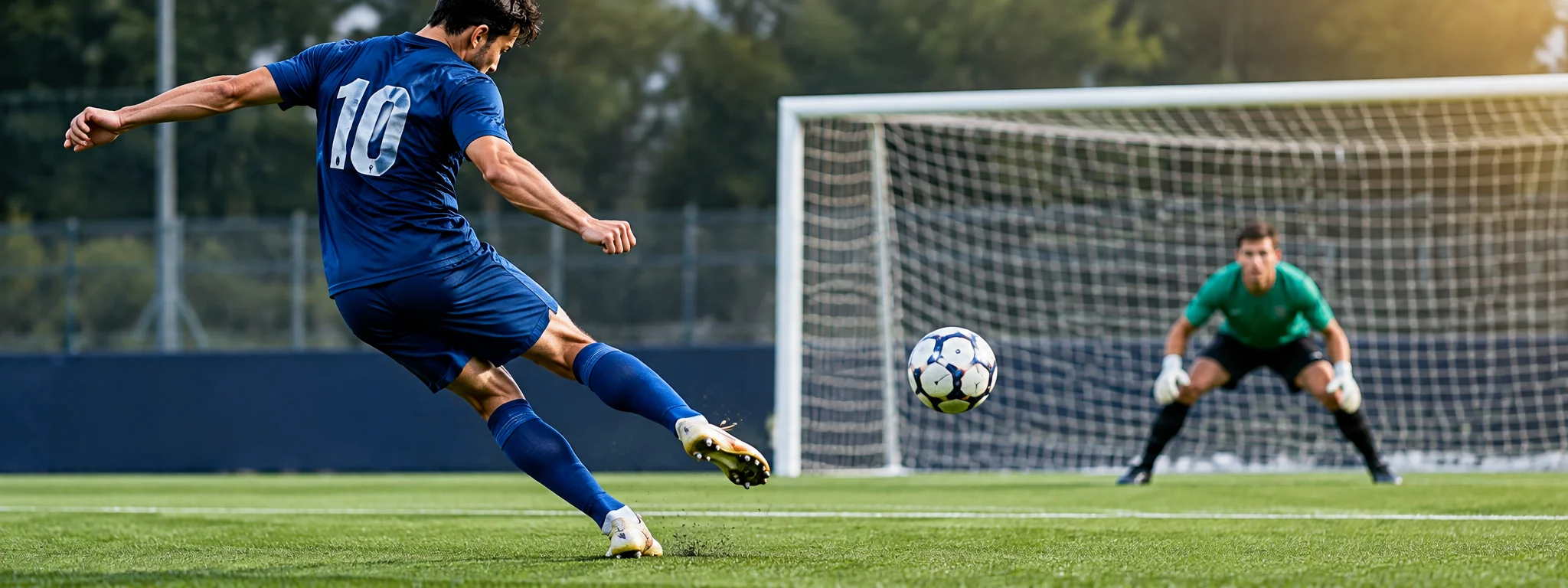
Scoring goals is the most exciting part of football. But shooting well requires proper technique and lots of practice. A good striker is calm in front of goal and picks their spot instead of just hitting hard.
How to practice it –
- Practice shooting with both feet from different angles on the pitch.
- Focus on hitting the ball cleanly through its centre always.
- Work on shooting after a first touch to simulate real match situations.
- Practice shooting from inside the box for accuracy first.
- Then gradually move back and work on longer range shooting.
5. Heading
Heading is a skill most young players avoid – but it is absolutely essential for winning aerial duels and scoring from corners and crosses. A player who can head the ball well is very hard to defend against.
How to practice it –
- Start with soft toss and head the ball back to your partner gently.
- Always use your forehead – never the top of your head.
- Practice jumping and timing your run to meet the ball at its highest point.
- Work on heading for power towards goal and heading to clear defensively.
- Build up gradually from standing headers to jumping headers over time.
6. Tackling & Defending
Defending is not just for defenders. Every player on the pitch needs to know how to win the ball back. Good tackling and defensive awareness makes you a complete footballer that any team needs.
How to practice it –
- Practice the sliding tackle only when you are completely sure you will win the ball.
- Work on staying on your feet and jockeying the attacker instead of diving in.
- Practice 1v1 defending drills with a partner to build your defensive confidence.
- Focus on your body position – stay low and balanced always when defending.
- Learn to read the game and intercept passes before they reach the attacker.
7. Movement Off the Ball
Most players only think about what to do when they have the ball. But good movement off the ball is what creates space and opens up the whole game for your team to play through.
How to practice it –
- Always look for gaps in the defence and move into them quickly.
- Practice making runs in behind the defensive line during training sessions.
- Work on your timing – move too early and you get caught offside.
- Learn to create space for a teammate by pulling a defender away from them.
- Watch professional football matches and study how top players move without the ball.
8. Football Passing Drills & Practice
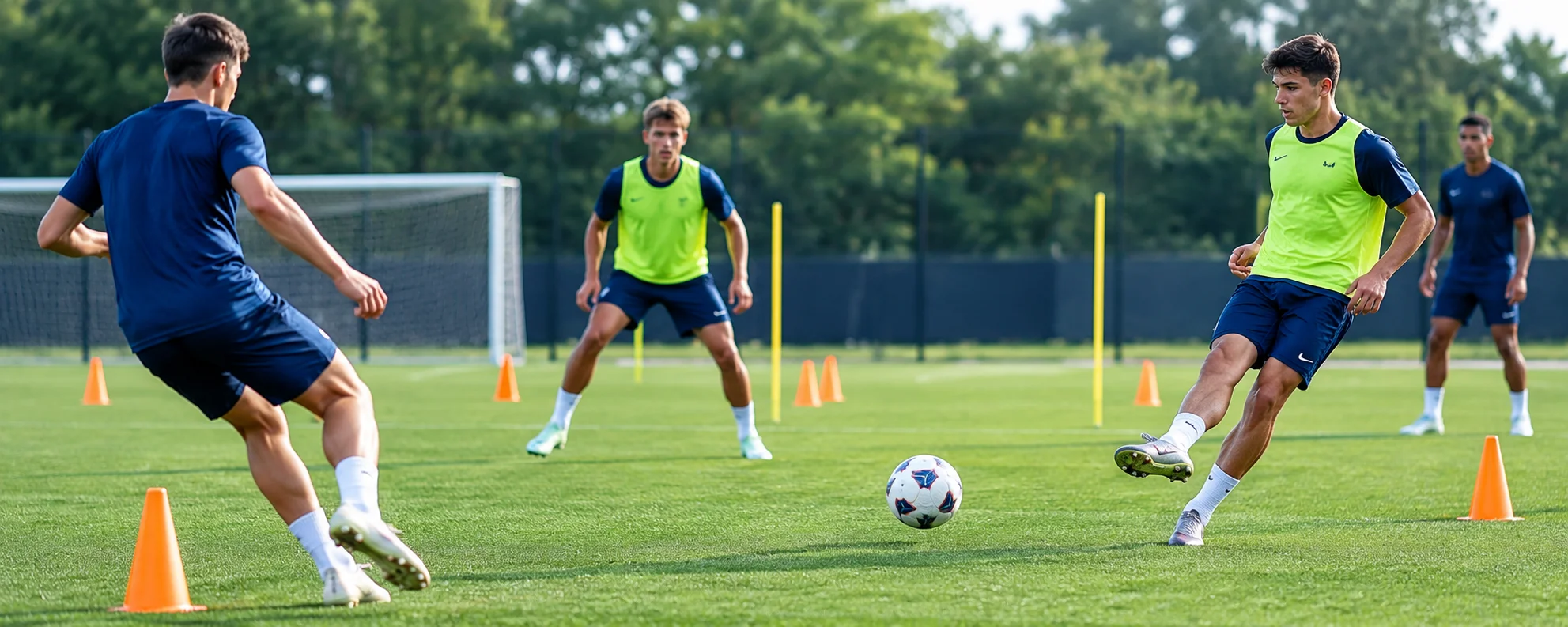
Regular Football Practice Drills focused on passing can make you sharper, faster, and more effective with the ball. Practising consistently with teammates helps you improve accuracy, coordination, and decision-making under pressure. The best teams in the world spend more time on football passing drills than anything else during training.
How to practice it –
- Do the triangle passing drill – three players passing in a triangle shape quickly.
- Practice the wall pass or one-two combination with a partner during every session.
- Set up a rondo drill – small sided keep ball game to practice quick passing under pressure.
- Work on switching the ball from one side to the other with long diagonal passes.
- Practice football passing skills under pressure by adding a defender to your drills.
9. Game Awareness & Decision Making
The smartest players on the pitch are not always the fastest or the strongest. They are the ones who see things before they happen and always make the right decision at the right time quickly.
How to practice it –
- Always scan the pitch before receiving the ball so you know your options already.
- Practice small sided games where quick decisions are needed constantly.
- Watch your own match footage and identify where better decisions could have been made.
- Train your brain to always think – what is my next move before the ball arrives.
- Play in different positions during training to understand the full game better.
10. Positioning & Recovery
Good positioning means you are always in the right place at the right time. And when you lose the ball, fast recovery gets you back into position before the opposition can take advantage of the situation.
How to practice it –
- Study your position’s responsibilities and always maintain your shape during matches.
- Practice sprinting back to your defensive position immediately after losing the ball.
- Work on your starting position before every set piece – both attacking and defensive.
- Do recovery run drills where you sprint from the attack back to defence repeatedly.
- Always communicate with teammates to maintain proper team shape and positioning.
How to Practice These Football Skills at Home
You do not always need a full pitch or a team to improve. Here are some simple ways to practice basic skills in football at home –
- Practise your first touch daily with a suitable ball and proper football equipment.
- Set up water bottles as cones and practice dribbling in your garden.
- Use a small wall space to practice football passing drills alone.
- Watch football videos online and study how top players move and position themselves.
- Work on your weaker foot for at least 10 minutes every single day.
- Do agility ladder drills at home to improve your overall foot speed and coordination.
Common Mistakes Players Make While Learning Football Skills
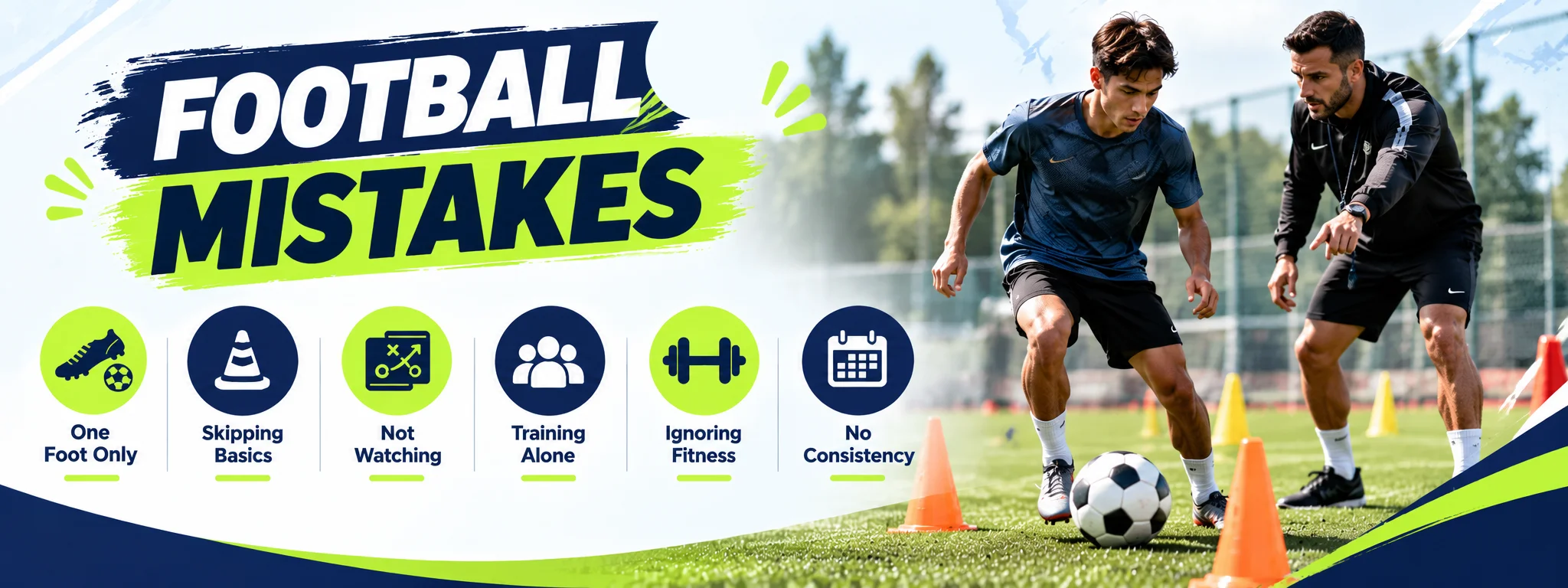
Even hardworking players make these mistakes. Avoid them and you will improve much faster –
- Only using their stronger foot – Always train both feet equally from day one.
- Skipping the basics – Trying fancy skills before mastering first touch and passing.
- Not watching the game – Football is mental too – study the game as much as you play it.
- Training alone always – Some football practice drills need a partner or small group.
- Ignoring fitness – Build stamina, rest well, and prevent sports injuries with proper warm-ups and technique.
- No consistency – Practicing once a week is never enough to see real improvement.
Start Learning Football the Right Way
Learning football the right way takes time, patience and the right guidance. The top 10 football skills we covered in this blog – from ball control and football passing skills to game awareness and positioning – are the real building blocks of a great footballer.
You can practise many of these skills at home, but having a qualified coach observe your technique and correct your mistakes can make a real difference. If you are a parent looking for structured training for your young player, learning how to choose the right football academy for your child can help you evaluate coaching quality, training methods, and the overall learning environment.
If you are serious about becoming a better footballer, join Sportyzo Football Academy in Gurgaon where our certified coaches train players of all ages with structured drills and personalised coaching. Book your free trial session today and take the first real step toward becoming the player you want to be!