Every child should receive a good beginning. Youth sports provide young people with their first chance to learn basic life skills. Young children experience major developmental advantages through sports participation.
The program teaches students to master physical skills and develop mental toughness. Young athletes who start sports early gain physical strength. They also boost mental sharpness and improve emotional balance.
They help kids stay healthy. Kids who play sports early learn teamwork, follow rules, and make friends. These abilities help students succeed in their educational paths and their life work.
The activities aim to develop people who have complete personal growth. The program helps children build healthy habits. These routines will benefit them for life, not just during sports. Parents and teachers help kids make the most of these benefits.
In this blog, we will discuss why early sports training matters for child development. Football Academy in Gurgaon – Enroll Now & Build Skills!
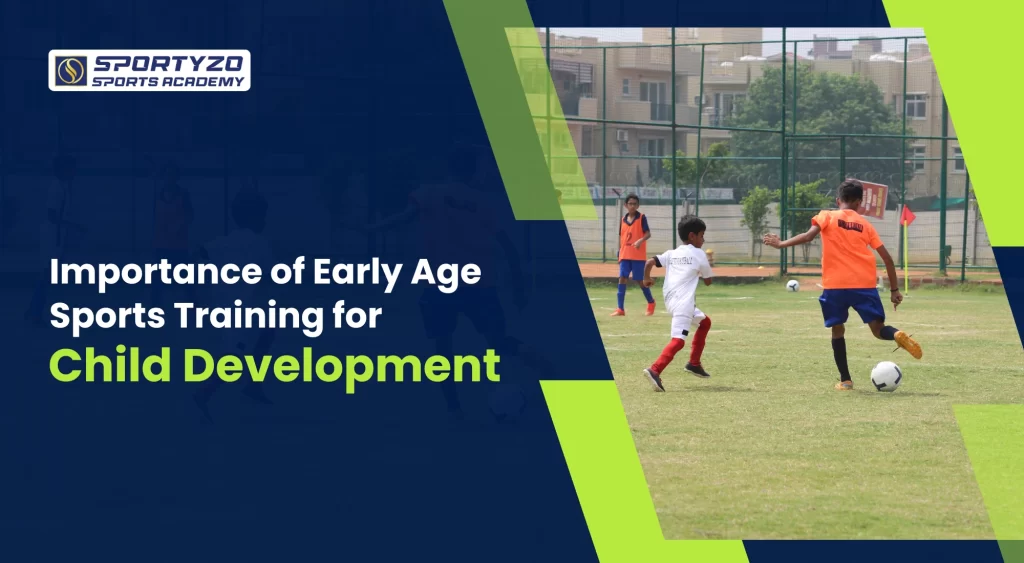
Importance of Early Age Sports Training for Child Development
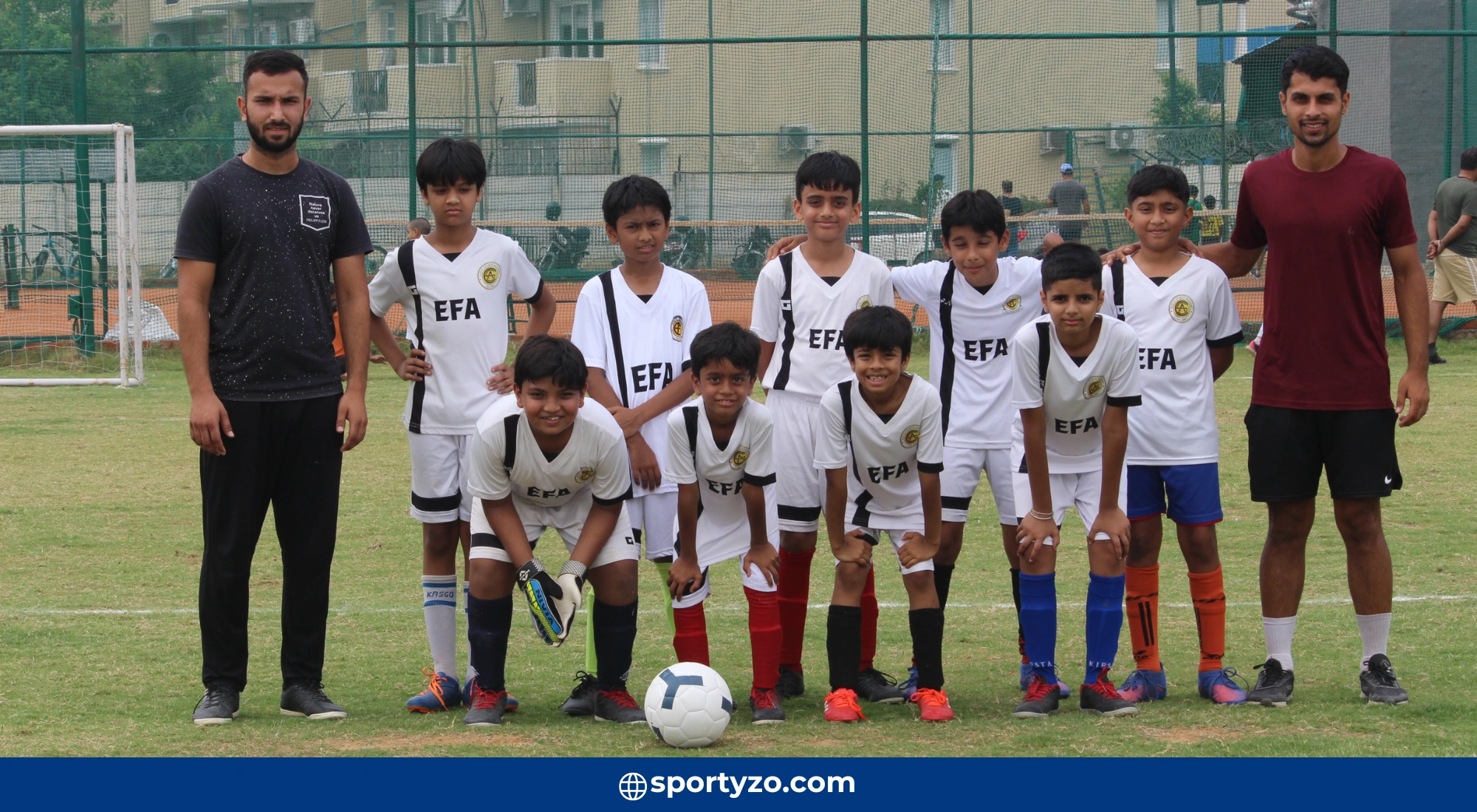
Training kids in sports early allows them more time to build their skills. It helps the body grow, sharpens thinking, and builds social and emotional skills for life. Here are some benefits of sports training for child development:
Physical Benefits
Sports training at an early age makes a child active and builds a healthy body. Regular movement strengthens bones and muscles. It also helps develop balance and keeps the heart and lungs working well. It also prevents the child from becoming overweight and developing further lifestyle diseases. Training in sports early helps kids build strength and stay healthy. Some of the physical advantages include:
- Stronger Bones and Muscles: Kids make their bones and muscles stronger by running, jumping, and climbing. The process enables child development while maintaining physical stability and activity.
- Better heart and lung health: Playing sports regularly boosts stamina. This happens by improving heart and lung function. Kids learn to play and move for longer without getting tired easily.
- Improved Balance and Coordination: The training program for children teaches them to boost their movement control abilities. A child performs activities that include catching, throwing, and balancing. These help with coordination.
Cognitive and Brain Development Benefits
Early sports training helps build the body and boost brain development. Physical exercise sharpens attention and memory, and helps children comprehend and solve problems. Children gain academic learning and develop an excellent mental health foundation while growing.
- Better Focus and Attention: Children who take part in sports activities develop better classroom concentration. Physical activity makes blood flow to the brain. The practice helps people enhance their ability to focus and maintain concentration.
- Stronger Problem-Solving Skills: Sports teach children to think immediately while making quick decisions. The process develops their problem-solving abilities, which they apply to both gaming activities and actual situations.
- Support for Mental Health: Physical sports create positive feelings for people during participation. The method helps people manage stress and anxiety. It also builds coping skills for dealing with emotional challenges.
Social and Emotional Benefits
Sports training for young kids in their early years creates lasting impacts. It helps their emotions and boosts their skills in making friends. Learning to talk with others enables children to develop social skills. Youngsters gain confidence through this process. Educational materials help students succeed in school and build useful life skills.
- Teamwork and Cooperation: Teamwork helps children learn to work together for common goals. Children learn social skills from their activities. These include sharing, listening, and helping others.
- Handling Success and Failure: Winning and losing are both part of games. The positive disposition of accepting results helps one maintain emotional balance.
- Boosting Self-Confidence: Kids who grow their skills early gain self-assurance as they advance. There is a strong belief that helps kids succeed in school and make friends.
- Discipline and Self-Control: Discipline emerges from consistent practice together with rule adherence. Children build patience and self-control through this process. This helps them in all parts of their lives.
- Sense of Belonging and Friendship: Team sports help kids feel included in their activities. The participants develop friendships and trust, which lead to emotional wellness.
Lifelong Benefits
Sports training in early childhood offers many benefits beyond just typical development. Children gain various abilities, values, and habits through their participation in sports. These experiences will help shape their growth into teens and adults. Benefits help people live longer and happier lives. They also achieve their goals successfully.
- Strong Mental Resilience: Sports teach kids to be persistent. They learn to face challenges instead of giving up. The training will prepare them to face stress and challenges ahead.
- Improved Academic and Career Growth: Sports activities help people learn teamwork, focus, and discipline. The skills you gain in school will aid your studies and future jobs. The experience functions as a basis for developing leadership skills and personal responsibility.
- Healthy Social Relationships: Young kids in sports learn to talk and work with others. Adult life skills help people build good friendships and work relationships with others.
Other Benefits of Early Age Sports Training
Early sports training brings many advantages to children during their developmental years. Their development receives physical, mental, and social advantages from this activity. Plus, it supports lifelong growth. Sports give kids many benefits that help them develop fully.
- Better Sleep Quality: Kids will join sports activities. This helps them sleep better, leading to peaceful nights filled with birdsong. A child needs good sleep. It helps them grow, learn, and have energy for the day ahead.
- Leadership Skills Development: Kids who are captains or group leaders gain leadership skills. They learn these skills by directing their peers. The process teaches leadership abilities at its core stage.
- Emotional Balance and Happiness: Sports create natural chemicals in the brains of children. The chemicals in their brains generate feelings of happiness. Children develop the ability to handle their emotions through positive techniques.
- Improved Motor Skills: The sports activities enhance motor skills through their training of both fine and gross motor abilities. Children improve their body movements through activities that include catching, throwing, and kicking.

Conclusion
Young athletes need early sports training. Parents and teachers say it’s crucial for their physical development. Sports extend beyond competitive play and championship wins.
This organization helps children become healthy individuals. The program boosts their self-confidence and builds emotional stability. Early sports training helps children develop various skills and abilities.
This program helps children develop physical strength, focus their minds, improve social skills, and develop positive behaviors for the future.
This program helps children work together. It builds their discipline and resilience. It also teaches them how to find happiness. The skills they learn enable them to perform well in school and in their future lives.
Children who start playing sports early remember what they learn even as adults. It gives children emotional stability. This helps them handle situations better and become more proactive.
Parents and teachers should support fun activities and balanced work. This allows children to enjoy learning without feeling stressed. Children who start playing sports early become healthier and more successful adults.
They are giving themselves a wonderful gift for their future.