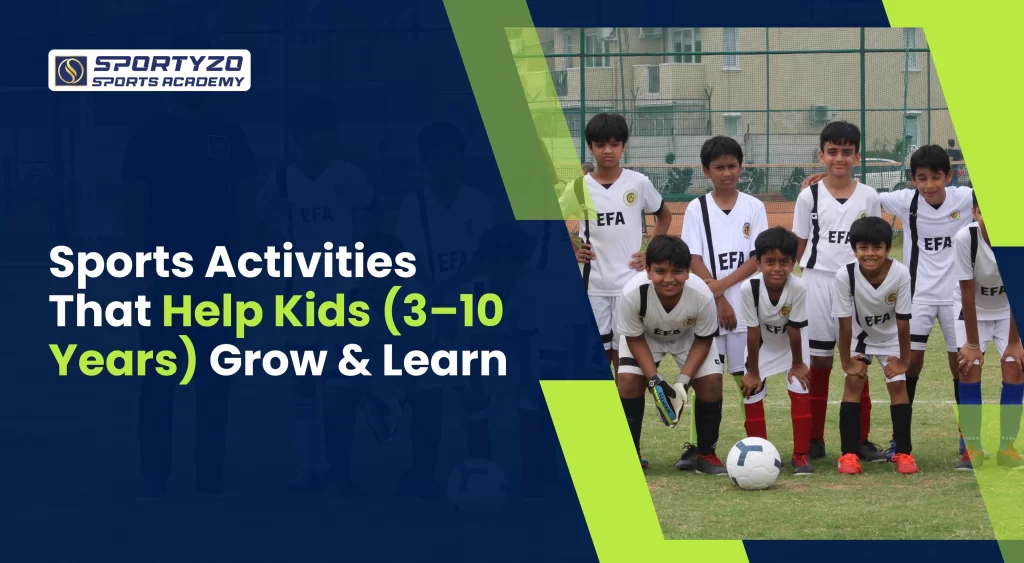
As parents, we all want our children to be healthy, confident, resilient, and smart. The good news? The right sports activities between ages 3 and 10 can deliver exactly that — and more. This is the golden window when movement literally shapes a child’s brain, bones, emotions, and social skills.
Here are some of the most developmentally powerful sports and activities for young kids, ranked by overall benefit, with exact age recommendations, what they teach, and practical tips so you can get started tomorrow.
Why sports matter for children
Sports activities for kids aged 3–10 are more than just fun—they are powerful tools for physical fitness, brain development, emotional strength, and social learning. Whether it’s swimming, football, gymnastics, martial arts, or simple running games, each sport plays a unique role in shaping a child’s growth. Choose the right sport by exploring both indoor and outdoor training options for the playground.
Physical Development
Physical development ensures better balance and body coordination, along with muscle strength and flexibility. It is observed that active children are less likely to become overweight and more likely to enjoy lifelong fitness.
Brain and Cognitive Growth
Sports activities focusing on brain development and cognitive growth generate stronger problem-solving skills along with better decision-making abilities in children. Physical activity boosts blood flow to the brain, which supports memory and learning.
Emotional and Social Development
Active participation in sports helps children learn social skills like teamwork, sharing, coping with winning and losing situations, and builds confidence. These life skills shape an emotionally healthy and socially confident child.
Best Sports Activities for Kids (3–10 Years)
Kids at different ages have different abilities. Here are the best activities for shaping their physical and mental well-being.
1. Swimming (Ages 3–10)
Why it is unbeatable:
- Life-saving skill (drowning is the #1 cause of death in 1–4 year-olds)
- Works every major muscle group with zero joint impact
- Builds lung capacity and cardiovascular health early
- Teaches breath control, improving emotional regulation
Developmental wins:
- Bilateral coordination
- Spatial awareness in three dimensions
- Overcoming fear of water builds confidence
Best age to start: 3–4 (parent-child classes), independent lessons from 4–5
Pro tip: Look for progressive swim schools that use play-based learning.
2. Gymnastics (Ages 3–9)
The only sport that hits all fundamental movement skills including balance, coordination, agility, strength, and flexibility.
- Enhances motor control and balance
- Improves attention and reading readiness
- Builds bone density through weight-bearing movements
Best format:
- 3–5 years: Preschool physical education
- 6–9 years: Recreational gymnastics
Caution: Avoid overly competitive programs before age 8.
3. Soccer / Futsal (Ages 4–10)
- Great cardio without feeling like exercise
- Teaches teamwork and cooperation
Indoor futsal offers more ball touches and faster skill development.
- Improves peripheral vision
- Boosts decision-making speed
- Teaches emotional regulation
4. Martial Arts (Ages 4–10)
Excellent for self-regulation, respect, and discipline.
- Improves focus and impulse control
- Builds confidence and emotional resilience
- Ages 4–6: Taekwondo
- Ages 7–10: Brazilian Jiu-Jitsu
5. Dance (Ages 3–10)
- Enhances rhythm and coordination
- Supports empathy and creativity
- Improves posture and body awareness
6. Climbing / Bouldering (Ages 4–10)
- Develops problem-solving skills
- Builds exceptional grip strength
- Boosts confidence in controlled challenges
7. Multi-Sport Programs (Ages 3–7)
The American Academy of Pediatrics recommends multi-sport participation until at least age 12.
These programs prevent burnout and build versatile athletes.
8. Track and Field (Ages 6–10)
- Short sprints and fun jumping events
- Encourages personal achievement
9. Basketball (Ages 5–10)
- Improves hand-eye coordination
- Enhances spatial awareness
10. Outdoor Free Play (Ages 3–10)
- Boosts executive function
- Strengthens immunity
- Reduces anxiety
Final Tips for Parents
- Encourage exploration of multiple sports.
- Prioritize fun over winning.
- Watch for burnout signs.
- Ensure enough sleep and free play.
About Sportzo
We understand working parents often lack time for parental training. That’s where sports academies play an important role in providing safe, structured environments for children.
We at Sportzo Academy in Gurgaon are dedicated to nurturing talent and promoting fitness, confidence, discipline, and teamwork.
The years between 3 and 10 define a child’s lifelong relationship with movement. Choose activities that inspire joy, resilience, and confidence.
Visit our academy for a demo session or contact us for more details.
FAQs (Frequently Asked Questions)
Is swimming a safe sport activity for children in the age group (3-10 years)?
Yes, swimming is a safe life-saving skill and good for physical as well as mental development of a child, but only if learned in the presence of a good, well-trained supervisor in a well-maintained swimming facility.
Ideally, how long should a child be physically trained per day?
Usually, the time frame for physical or sports activity varies for different age groups, but if we have to draw an average for all age groups, we can say anything between 30 minutes to 60 minutes of physical activity per day is ideal.
Which sports are good to inculcate social skills in children?
Any group sports involving a no. of children is good to inculcate emotional and social skills in children.
Biggest mistakes parents make while raising their children?
The biggest mistake parents nowadays make is treating sports activities of children as some high-level competitions and putting too much performing pressure on them, thus reducing the enthusiasm and interest of children in sports altogether.
What is an ideal age to start a sports activity for children?
There is no ideal age to start a sport activity, for example, for ages 3–4 is fine for fun, play-based classes (swimming, gymnastics, multi-sport, dance). Real “teams” with scores and positions should wait until 6–7 at the earliest.