
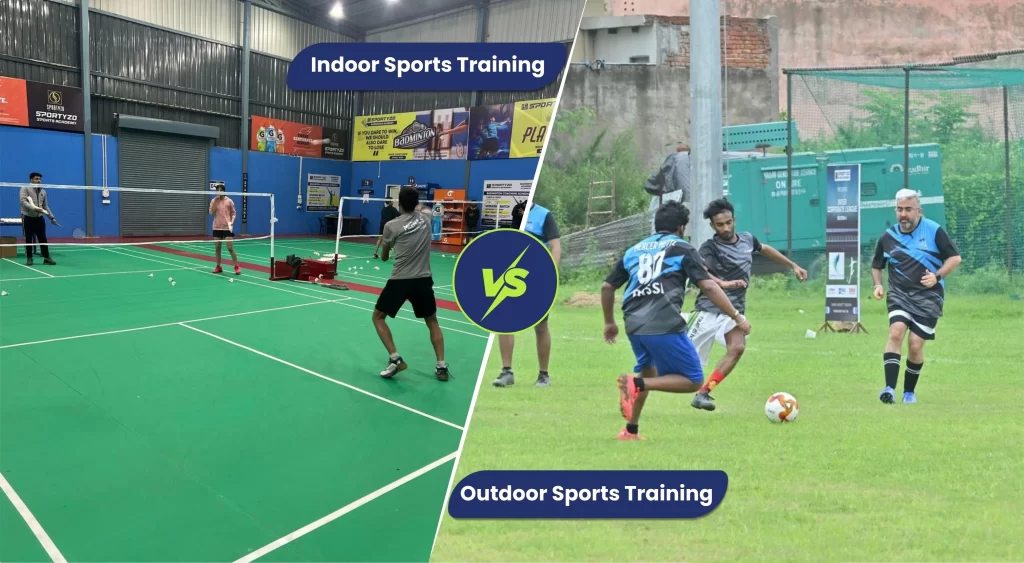
With government interventions and fast-evolving sports culture, athletes, youth and fitness enthusiasts are continuously looking for the best training options in the best possible environment and with technically advanced equipment.
But sports persons generally face huge confusion about whether to choose indoor or outdoor sports training, especially with the rise of modern indoor arenas, artificial synthetic turf courts and other advanced security measures in indoor training and the more natural sporting vibe of outdoor training.
It is observed that both indoor and outdoor training facilities have some different, unique features to offer.
Understanding these differences is important for picking the best environment to match their fitness enthusiasm.
Here in this detailed comprehension, we’ll explore the pros and cons of indoor V/S outdoor training, along with comparisons and key suggestions to pick the best.
What Is Indoor Sports Training?
Indoor sports training takes place inside a controlled environment such as sports complexes, gyms, indoor stadiums, or dedicated training studios. And we have provided an indoor box cricket Ground in Gurgaon.
It includes activities like indoor cricket, badminton, swimming, table tennis, squash, basketball, gymnastics, martial arts, and fitness strength training.
One of the biggest advantages of indoor training is independence from the weather. Rain, extreme heat, cold winds, or pollution — none of these affect indoor sessions. This helps athletes maintain a disciplined routine without cancellations.
Pros of Indoor Sports Training
| Advantage | Description |
| Weather-Independent | Training is not affected by rain, heat, cold winds, or pollution. |
| Consistent Conditions | Stable temperature, lighting, and surface quality ensure predictable performance. |
| Safety | Reduced risk of environmental hazards such as uneven terrain or traffic. |
| Specialized Equipment | Access to gym machines, treadmills, and sport-specific facilities. |
| Year-Round Availability | Training schedules remain consistent throughout the year. |
| Lower Injury Risk | Shock-absorbing flooring reduces slips, sprains, and impact injuries. |
| Privacy & Focus | Fewer distractions allow concentrated skill development. |
Cons of Indoor Sports Training
| Disadvantage | Description |
| Expensive | Memberships, coaching fees, and equipment can be costly. |
| Limited Space | Restricted movement for sports requiring large areas. |
| Air Quality | Poor ventilation can affect air circulation. |
| Monotonous | Repetitive environment may reduce motivation. |
| Limited Natural Light | Lack of sunlight can affect mood and vitamin D levels. |
| Crowding | Peak hours may lead to shared equipment and space. |
| Surface Differences | Indoor surfaces may differ from outdoor competition conditions. |
What Is Outdoor Sports Training?
Outdoor sports training takes place in natural or open-air environments such as parks, public grounds, running tracks, beaches, hills, and open stadiums.
Outdoor sports include football, cricket, athletics, hockey, cycling, kabaddi, volleyball, and endurance-based activities.
Outdoor training uses natural surroundings and terrains to enhance stamina, adaptability, and physical resilience.
Pros of Outdoor Sports Training
| Advantage | Description |
| Free Access | Public parks and grounds are usually free of cost. |
| Natural Environment | Fresh air and sunlight improve mental health. |
| Varied Terrain | Builds balance, strength, and adaptability. |
| Mental Refreshment | Natural surroundings reduce stress and boost motivation. |
| Realistic Conditions | Matches actual competition environments. |
| Social Interaction | More opportunities to interact with other athletes. |
| Cardiovascular Benefits | Elevation and wind resistance increase workout intensity. |
Cons of Outdoor Sports Training
| Disadvantage | Description |
| Weather Dependent | Training can be disrupted by rain, heat, or pollution. |
| Injury Risk | Uneven terrain, traffic, and poor lighting increase risk. |
| Routine Inconsistency | Weather changes affect performance tracking. |
| Limited Technology | Fewer advanced tools compared to indoor training. |
| Seasonal Restrictions | Training often becomes seasonal. |
| Environmental Health Risks | Exposure to pollution, allergens, insects, and UV rays. |
| Time Constraints | Depends on daylight and crowd availability. |
Conclusion
Both indoor and outdoor sports training have their own advantages and limitations. Indoor training offers consistency, safety, and advanced equipment, while outdoor training builds endurance, stamina, and adaptability in real-world conditions.
The smartest approach is to evaluate your goals and choose the environment that supports long-term growth, motivation, and performance.
FAQs (Frequently Asked Questions)
What’s Best Indoor Sports Training vs Outdoor Sports Training?
Both outdoor and indoor sports training have their own pros and cons. Choosing the best training conditions also depends on the sport type, fitness goals, personal preferences and weather conditions.
Which training is best for mental toughness?
Training target for mental toughness can be any conditions, indoor or outdoor, or a hybrid of both. Mental toughness usually depends more on the willpower of athletes rather than the training environment.
Which training environment is safer?
Ideally, if done in the presence of proper supervisors, both types of training are safe, but if we have to pick more safer option, it is indoor training due to the presence of more safety harnesses and a controlled environment chances of injury are less.
Is there a high risk of disease spread in indoor training facilities?
If an indoor training facility is poorly maintained with bad ventilation and air circulation, then chances of spreading disease id generally high.