Have you ever wondered why the same tennis stroke goes past you on one court but comes slower on another? It’s not only about the colour of the court. These different types of courts affect the speed of the ball, its bouncing, your feet movement and the type of strokes that will suit you.
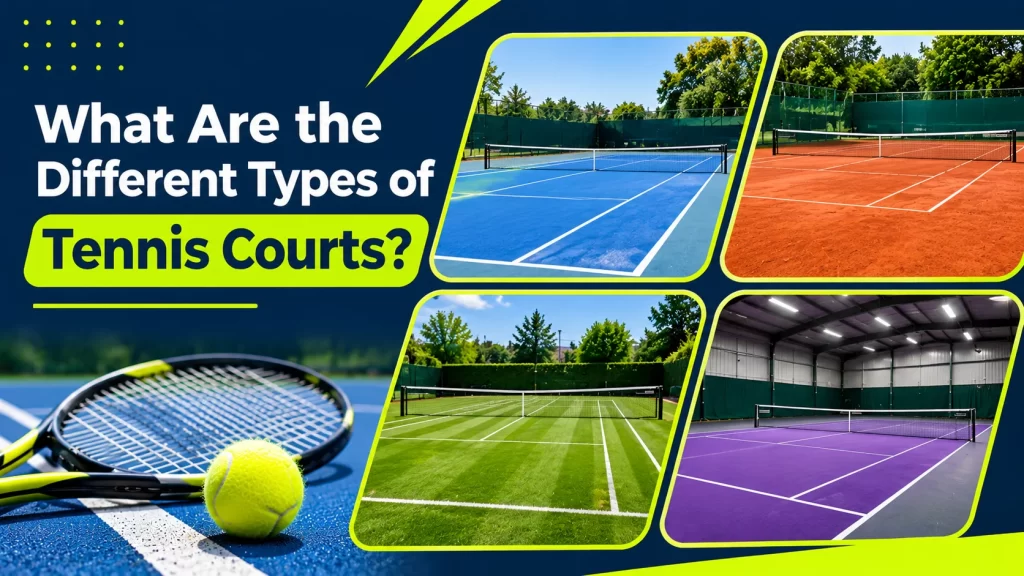
Tennis courts include hard courts, clay courts, grass courts and carpet courts and each of these provides its own kind of challenge for the player. In case you have started playing tennis in Gurugram, it’s vital for you to understand the peculiarities of these four tennis court surfaces.
Quick Comparison of Different Types of Tennis Courts
4 Different Types of Tennis Courts Surfaces
The four best types of courts in tennis include hard court, clay court, grass court, and carpet courts. Different surfaces for each type of court vary in terms of speed of the ball, height, and movement of the players.
1. Hard Courts Are The Most Versatile Playing Surface
Hard courts generally consist of either asphalt or concrete surfaces topped with an acrylic one. The ball bounces predictably, making it easy for you to time your hits. The speed of the ball is moderate to fast, depending on the surface of the court.
This explains why hard courts work for all styles of play. You can practise powerful serves, baseline rallies and quick attacking shots without changing your entire approach.
What makes hard courts useful?
- Consistent bounce helps players judge their shots.
- They support both attacking and defensive styles.
- They are commonly found at tennis training facilities.
However, hard courts offer less natural sliding than clay. Players need good footwork when stopping or changing direction. The Australian Open and US Open are played on hard courts. It is best for beginners learning basic strokes and players developing an all-round game.
2. Clay Courts Cause Slower Play and Longer Rallies
Clay courts typically have a loose top layer made from crushed brick, stone or other fine mineral materials. The surface creates more friction when the ball lands. As a result, the ball usually slows down and bounces higher.
This gives players more time to prepare their next shot. Ever watched a tennis rally that seems to go on forever? Clay often helps create those long exchanges. Players who use topspin and enjoy patient baseline rallies can benefit from these conditions.
What makes clay courts different?
- Slower ball speed often creates longer rallies.
- Higher bounces reward controlled topspin.
- The loose surface allows trained players to slide into shots.
However, sliding takes practice. Beginners shouldn’t try dramatic slides before learning proper movement and balance. Clay also needs regular care to keep the surface suitable for play. The French Open, held at Roland Garros, is the best known clay court tournament. It is best for players who want to develop rally consistency, patience and controlled movement.
3. Grass Courts Cause Faster Play and Lower Bounces
Grass courts use natural grass grown over a firm soil base. They are famous for quick play and lower bounces. The ball can skid after landing, giving players less time to react. Imagine hitting a shot that rises comfortably on clay.
On grass, a similar shot might stay much closer to the ground. That difference changes how you prepare and move. Players often need to react earlier and keep their movements precise.
What makes grass courts challenging?
- Fast shots demand quick reactions.
- Lower bounces require better timing.
- The surface can produce less predictable ball movement.
Grass can reward strong serving, early ball striking and attacking play. However, maintaining natural grass courts requires considerable care. Weather and grass condition also affect how they play.
Wimbledon is the most famous grass-court tournament. It is best for players developing fast reactions, precise timing and aggressive shot selection.
4. Carpet Courts Are Synthetic Surfaces for Indoor Tennis
Carpet courts use synthetic materials, such as textile or polymer-based surfaces, installed over a prepared base. You’ll often find them in indoor recreational facilities. Unlike clay or natural grass, carpet courts can provide a controlled playing environment indoors.
However, not every carpet court plays the same way. Some produce quick, low bounces, while others offer a slower pace depending on the material and construction. That’s why it’s inaccurate to assume all carpet courts are fast.
What makes carpet courts useful?
- Indoor facilities allow play in different weather conditions.
- Different surface materials create different playing speeds.
- Players can practise on a synthetic surface with its own movement characteristics.
Carpet courts are less common in major professional tournaments today, but they remain relevant in recreational tennis. It is best for indoor players and those who want experience with different playing conditions.
How Do Different Tennis Court Surfaces Change the Way You Play?
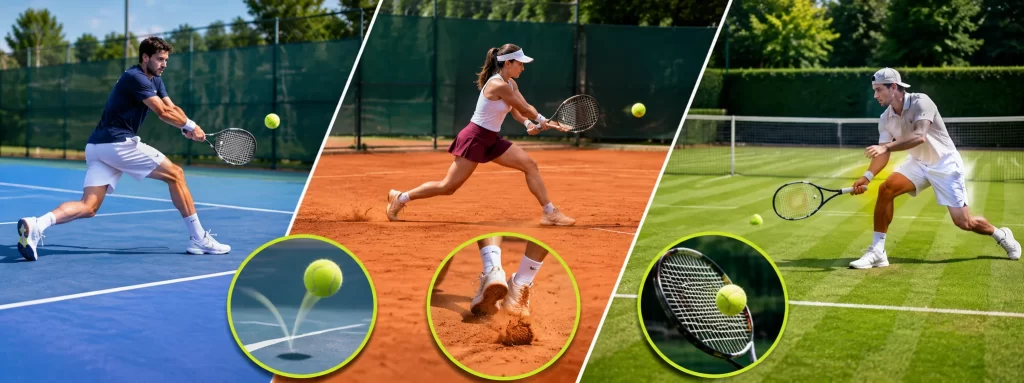
The biggest differences between tennis court surfaces appear in three areas: ball bounce, player movement and shot selection. You might use the same racket and technique, yet the results can feel completely different.
How Does Court Surface Affect Ball Speed and Bounce?
Clay usually slows the ball and produces higher bounces. Grass often creates faster, lower bounces. Hard courts typically offer a more predictable response, although their speed varies. Carpet surfaces can behave differently depending on their design. These changes affect how much time you have to prepare for the next shot.
How Does Court Surface Affect Footwork and Movement?
On hard courts, players often use controlled steps to stop and change direction. Clay allows sliding, but the movement requires training. Learning how to improve footwork in tennis can help players maintain better balance, adjust their steps and move confidently across different court surfaces.
Grass can become slippery, especially when damp, so balance and careful footwork matter. The important lesson? Don’t move exactly the same way on every surface.
How Does Court Surface Affect Playing Style?
Slow courts often favour patient players who build points through longer rallies. Faster courts can reward powerful serves, quick reactions and early attacking shots. However, no surface guarantees success for one playing style.
Developing essential tennis skills, such as shot selection, timing and adaptability, helps players adjust their game rather than blaming the court after every missed shot.
Which Type of Tennis Court Is Best for Beginners?
Hard courts are often a practical starting point because they provide a fairly consistent bounce. However, clay courts can also be excellent for beginners, especially when coaches use longer rallies to develop control and timing.
The best choice depends on what you want to practise. Along with selecting a suitable court, choosing the right tennis racket according to your skill level and playing style can make practice more comfortable and effective.
If you’re joining tennis classes, don’t choose an academy based on court material alone. Good coaching, a well-maintained surface and regular practice matter more.
For example, a beginner practising consistently on clay may develop better control than someone who occasionally plays on several surfaces without guidance. Choose a court where you can learn safely, practise regularly and enjoy the game.