
Have you ever watched a tennis match and thought — “I wish I could play like that?”
Most people have. Tennis looks so smooth and exciting on screen. But the moment you actually step onto the court for the first time — everything feels confusing. How do you hold the racket? Where do you stand? How do you even hit the ball properly?
It feels like too many things to learn at once. And that is completely normal. Every single tennis player felt exactly the same way on day one.
But here is the truth that nobody tells beginners. Most people who start tennis quit within the first few months. Not because tennis is too hard. But because they started learning the wrong things in the wrong order.
If you build the right foundation from day one, tennis becomes enjoyable, exciting, and something you will love for life.
In this blog post, we break down the top 7 tennis skills every beginner must learn first — in the exact order a certified coach would teach you.
Why Learning the Right Skills Early Matters
Bad habits in tennis are extremely hard to fix once they get comfortable in your body. A wrong grip, a poor swing, or lazy footwork — if practiced for weeks — becomes your natural style. And unlearning it later takes twice the effort.
And here is something that will genuinely surprise you — nearly 70% of tennis points are not won by hitting powerful shots. They are won simply by NOT making mistakes. The player who stays consistent and keeps the ball in play longer — that player wins almost every time. So forget about hitting hard. Focus on hitting right.
At Sportyzo, Head Coach Aditya Kumar and his certified team — including Assistant Head Coach Satbir Tanwar — personally guide every beginner through these exact 7 skills from day one.
7 Essential Tennis Skills Every Beginner Should Learn
Skill 1 — Learn the Right Tennis Grip
Most beginners pick up a racket and just hold it however feels natural. And that is actually the problem. A wrong grip affects every single shot you hit — your forehand, your backhand, your serve — everything. Yet most people never even realise their grip is the reason their shots keep going wrong.
For beginners, the Eastern Forehand grip works best. The easiest way to find it is the “shake hands” method. Hold your racket completely vertical with your non-dominant hand, as if the racket face is a mirror. Then, take your dominant hand and simply slide it down the frame to shake hands with the handle. Your index knuckle should rest flat against the side of the grip. Get this right first and everything else becomes easier.
Skill 2 — Forehand and Backhand Groundstroke
Groundstrokes are simply your forehand and backhand shots — the two shots you will hit more than anything else on a tennis court. If these two feel comfortable and consistent, your entire game starts feeling better. They are not optional. They are the base of everything.
The best way to practice groundstrokes as a beginner is against a wall. Just hit, watch the ball come back and hit again. Focus on keeping your grip relaxed, rotating your body and following through after every shot. Start slow. Control always comes before speed.
Skill 3 — Footwork & Court Movement
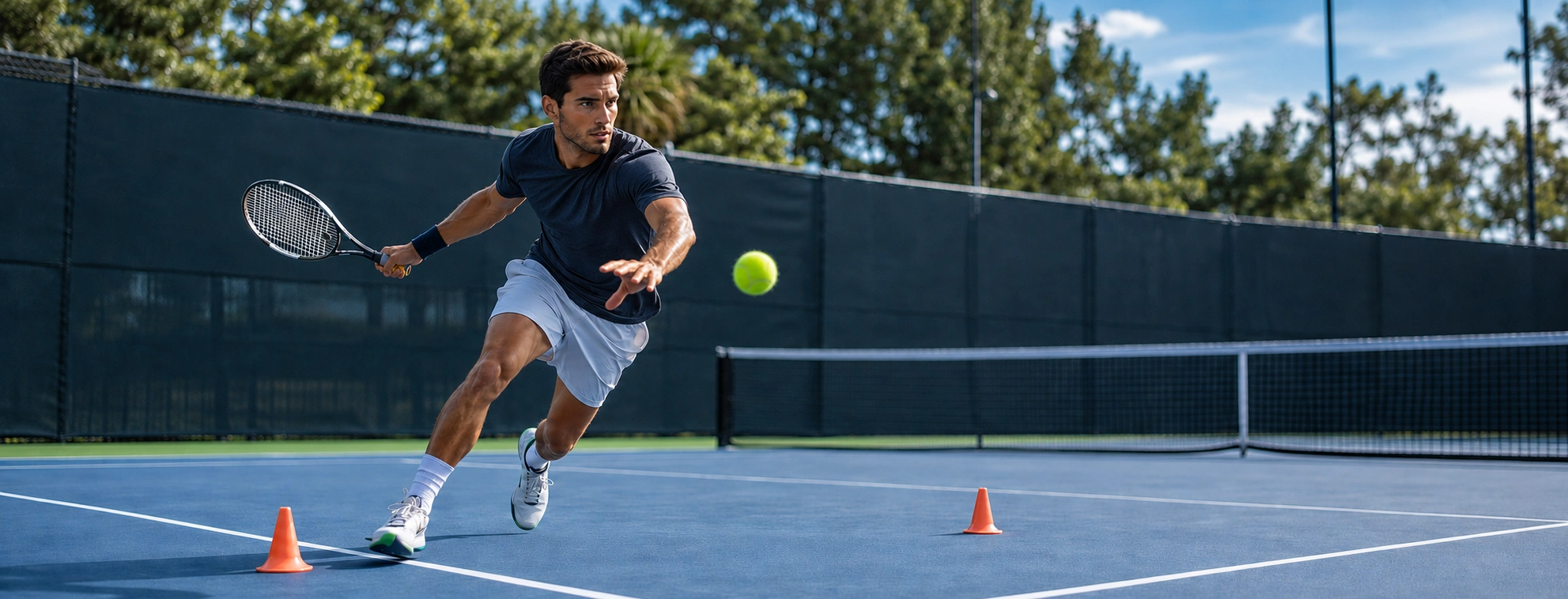
Most beginners focus only on their swing and completely forget about their feet. But here is the truth — it does not matter how good your swing is if you are not in the right position when the ball reaches you. Footwork is what gets you there.
Think of footwork as the engine behind every shot. Learn two basic movements first — the split step and the side shuffle. The split step prepares your body to move in any direction. The side shuffle keeps you balanced while moving. Practice these and every shot suddenly becomes easier.
Also Read: How to Maintain Your Tennis Equipment for Longer
Skill 4 — Serving Practice
The serve is the one shot in tennis that is completely in your control. No opponent, no pressure — just you and the ball.
But it is also the hardest skill for beginners to get right. Start simple. Practice your ball toss separately before even swinging the racket. A consistent toss is the foundation of a good serve.
Once the toss feels natural, work on your stance and swing motion. Aim for a target on the service box rather than trying to hit hard.
Skill 5 — Master the Volley for Better Net Play
Have you ever seen a player rush towards the net and tap the ball back before it even bounces? That is a volley. It looks difficult but it is actually one of the simplest shots in tennis once you understand it. No big swing needed at all.
A volley is all about touch — not power. Keep your racket up at chest height, step into the ball and gently punch it forward. Do not swing. Just block it back. Practice this slowly near the net and your confidence will build faster than you expect.
Skill 6 — Master Court Positioning
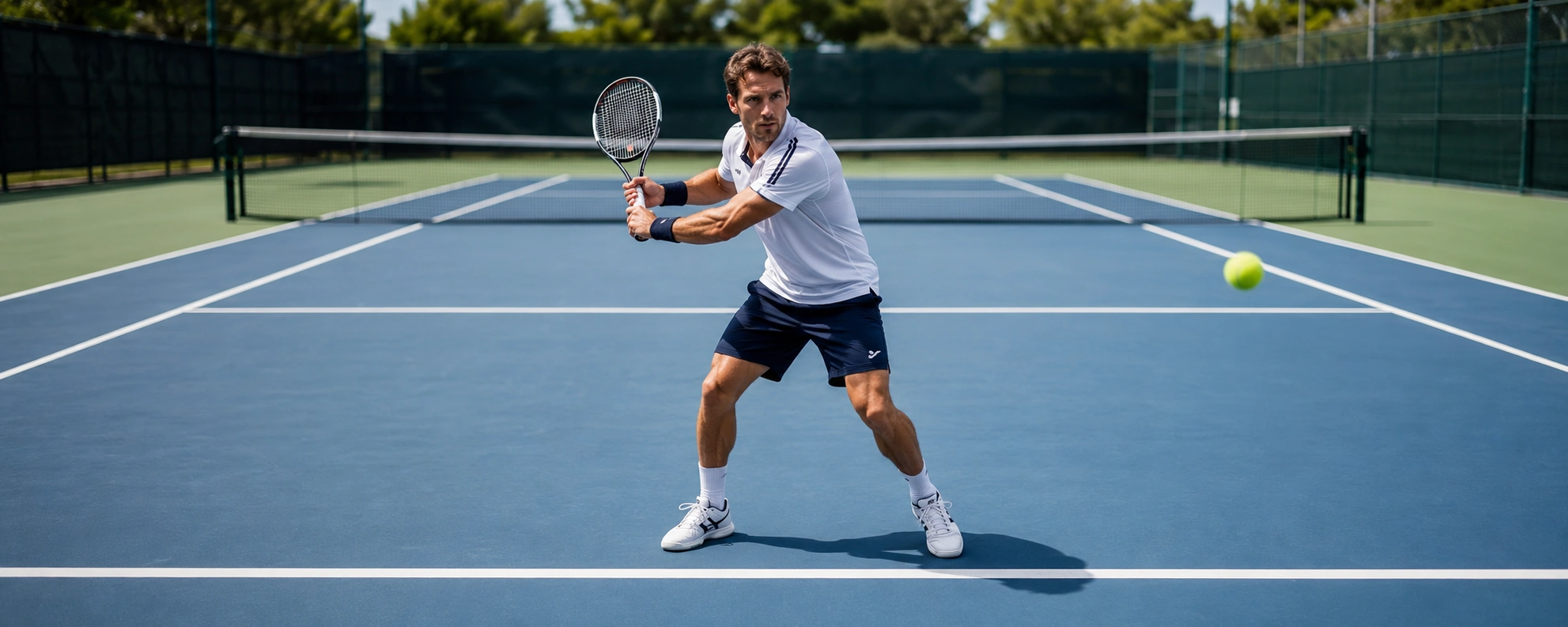
Ever feel like you are always chasing the ball and never ready for the next shot? That is not a fitness problem. That is a positioning problem. Most beginners simply do not know where to stand on the court — and it costs them so many easy points every single game.
The simple rule is this — after every shot you hit, do not just blindly rush back to the exact center of the baseline. Instead, recover to the center of your opponent’s possible hitting angles. This smart shift closes down their easiest return options, saves you from running extra every single point, and keeps you ready for anything.
Skill 7 — Build Mental Toughness
You hit a simple shot into the net. Then another. Suddenly your head drops, your confidence disappears and everything starts going wrong. Sound familiar? Every tennis player — beginner or professional — has been in that exact moment. Tennis is not just a physical game. It is equally a mental one.
The players who improve fastest are not always the most talented. They are the ones who stay calm after mistakes, reset quickly and focus on the very next point. Missing a shot is not failure. It is part of learning. Train your mind just like you train your swing.
Also Read: Essential Tips for Coaching Table Tennis Beginners
Common Mistakes Beginners Should Avoid
Many new players slow their progress by developing poor habits. Avoid these common mistakes:
- Holding the racket too tightly
- Standing flat-footed
- Watching the racket instead of the ball
- Trying to hit every shot hard
- Ignoring footwork
- Skipping warm-ups
- Practicing inconsistently
- Becoming discouraged after mistakes
Correcting these habits early makes improvement much faster.
Book a Free Trial Class at Sportyzo Today!
Still thinking? Let your child decide! Experience world-class football coaching firsthand. No fees, no pressure — just pure football fun and skill development for your child.
Conclusion
Learning tennis is not about being naturally talented. It is about showing up, staying patient, and learning the right things in the right order.
Every great tennis player you admire today — they all started exactly where you are right now. Confused, excited and holding a racket for the very first time.
The 7 skills we covered in this blog are not just techniques. They are your roadmap. Follow them one by one and you will surprise yourself faster than you think.
But here is the most important thing — do not try to learn alone. A good coach changes everything. They save you months of frustration and bad habits.