
Badminton is one of the fastest racket sports. A player has only a few seconds to read the opponent, move across the court, reach the shuttle, and play the right shot. This is why speed and reflexes matter so much in badminton.
If you want to know how to improve badminton reflexes and speed quickly, the answer is not just running faster. You need better footwork, faster reaction time, strong legs, good balance, sharp eyes, and quick racket movement. The right training drills can help you reach the shuttle earlier, defend smashes better, and recover faster after every shot.
In this guide, you will learn practical badminton reflex drills, speed training exercises, footwork tips, and a simple weekly practice plan to improve your game faster.
Why Reflexes and Speed Matter in Badminton
In badminton, every rally changes quickly. One moment you may be defending a smash, and the next moment you may need to rush forward for a net shot. Fast reflexes help you respond to sudden shots, while speed helps you reach the shuttle before it drops.
Good badminton reflexes can help you:
- Return fast smashes
- React quickly during doubles rallies
- Improve net play
- Reach drop shots faster
- Cover all court corners
- Reduce late shots
- Stay balanced during pressure rallies
- Improve overall match performance
10 Best Ways to Improve Badminton Reflexes and Speed Quickly
Badminton is all about quick reflexes, speed and good agility. But all these are achieved only with great practice, constant training, and many players also choose to join the badminton academy to get proper coaching and structured drills. Below are 10 best ways to improve badminton reflexes and speed.
1. Master the Split Step
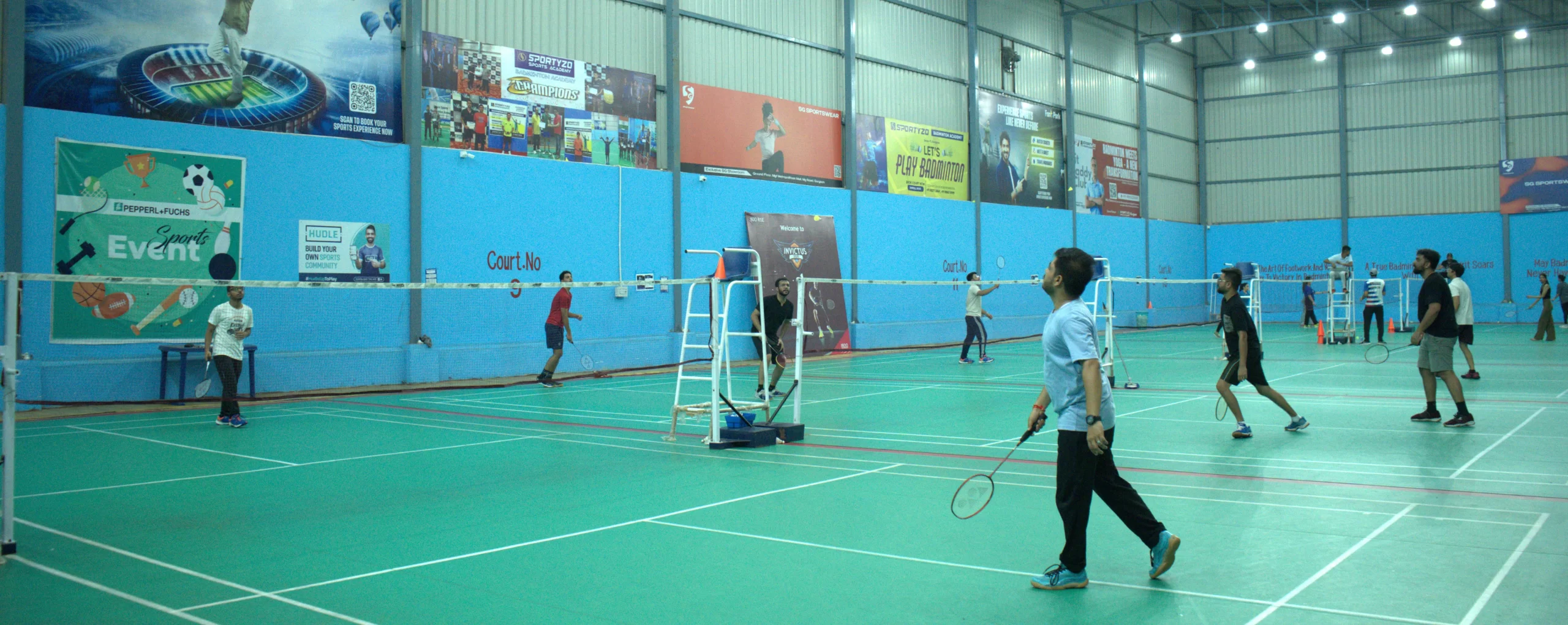
The split step is one of the most important movements in badminton. It prepares your body to move in any direction quickly.
To do a split step:
- Stand in your base position
- Keep your knees slightly bent
- Stay on the balls of your feet
- Make a small bounce as your opponent hits the shuttle
- Land balanced
- Push quickly toward the shuttle
The split step improves your first movement. Without it, you may stand flat-footed and react late. If you want to improve badminton speed, start with this basic movement.
2. Practice Shadow Footwork Drills
Shadow footwork means moving around the court without a shuttle. It trains your legs, balance, timing, and recovery. Many badminton training resources include shadow footwork, six-corner movement, multi-shuttle, ladder drills, reaction ball, and wall rally as useful drills for speed, agility, and reflexes.
How to do shadow footwork:
- Start from the center of the court
- Move to the front right corner
- Return to center
- Move to the front left corner
- Return to center
- Move to the rear right corner
- Return to center
- Move to the rear left corner
- Repeat with proper badminton steps
Recommended routine:
- 30 seconds work
- 30 seconds rest
- 5 rounds
Focus on quality. Keep your body low, use small fast steps, and return to the center after every movement.
3. Use Six-Corner Footwork Drills
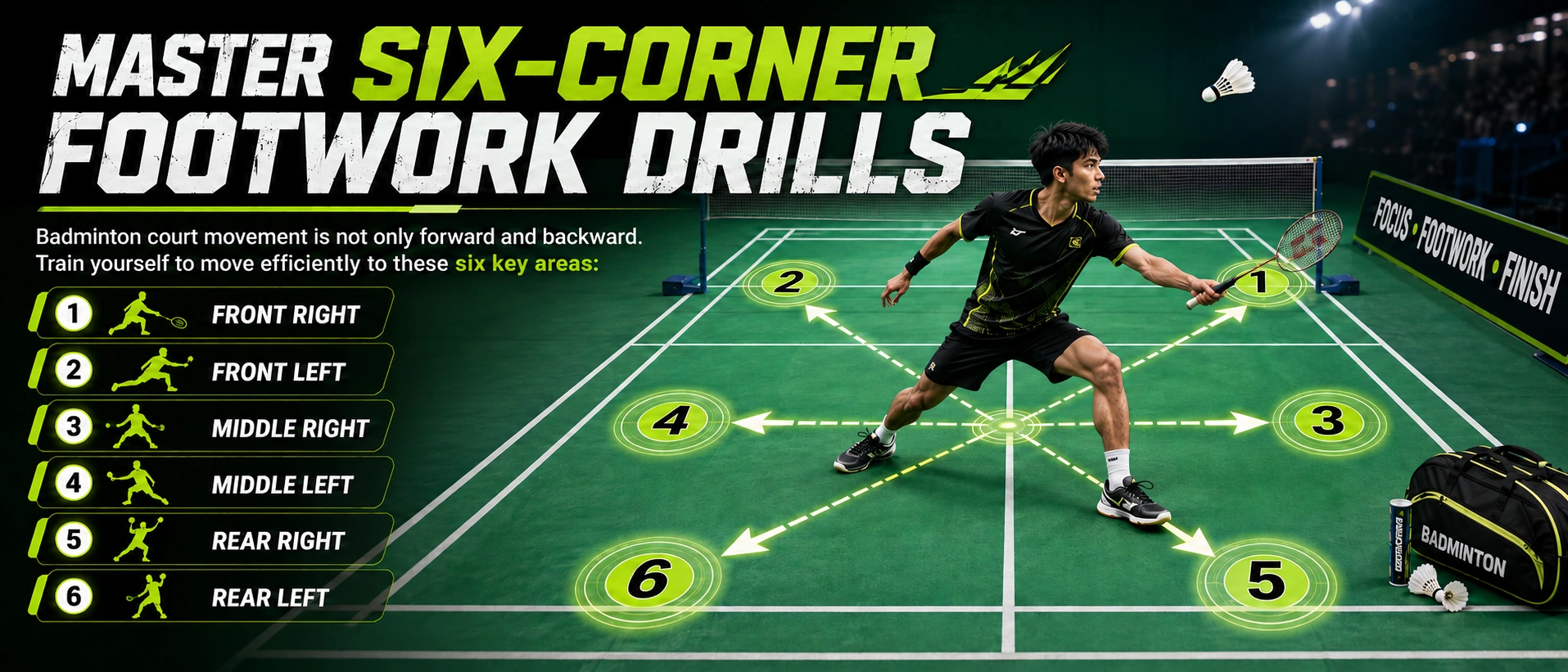
Badminton court movement is not only forward and backward. You need to move to six main areas:
- Front right
- Front left
- Middle right
- Middle left
- Rear right
- Rear left
This drill improves court coverage and speed. Babolat’s badminton reaction-time guide also recommends footwork drills focused on fast starts toward 4 or 6 corners, using visual or audible signals from a coach or partner.
How to do it:
- Stand at the center base
- Ask a partner to call any corner
- Move quickly to that corner
- Return to base
- Repeat for 30–45 seconds
This drill is better than fixed movement because it trains real match reactions.
4. Add Multi-Shuttle Training Drills
Multi-shuttle training is one of the best badminton drills for improving speed, reflexes, stamina, and shot response. In this drill, a coach or partner feeds shuttles quickly to different areas of the court.
How to do it:
- Ask your coach or partner to feed 8–12 shuttles
- Move quickly to each shuttle
- Play each shot with control
- Return to base after every shot
- Rest after each set
- Complete 4–5 sets
Babolat’s guide also includes multi-shuttle training with 5 series of 8 to 12 shuttles, where the coach can increase pace to improve reaction speed.
Benefits of multi-shuttle training:
- Improves reaction speed
- Builds match-like movement
- Improves stamina
- Trains quick recovery
- Helps in attacking and defensive play
Do not focus only on hitting hard. Focus on fast movement, correct footwork, and balance after every shot.
5. Practice Reaction Ball Drills
A reaction ball bounces in random directions. This makes it useful for hand-eye coordination and quick response.
How to do it:
- Stand in ready position
- Drop the reaction ball on the floor
- Catch it quickly after the bounce
- Use both hands
- Try single-hand catching
- Increase speed slowly
You can also do this drill with a partner. Ask your partner to throw the ball toward the wall or floor, and react quickly to catch it.
This drill helps beginners improve visual reaction, focus, and fast hand movement.
6. Wall Rally Practice Drills
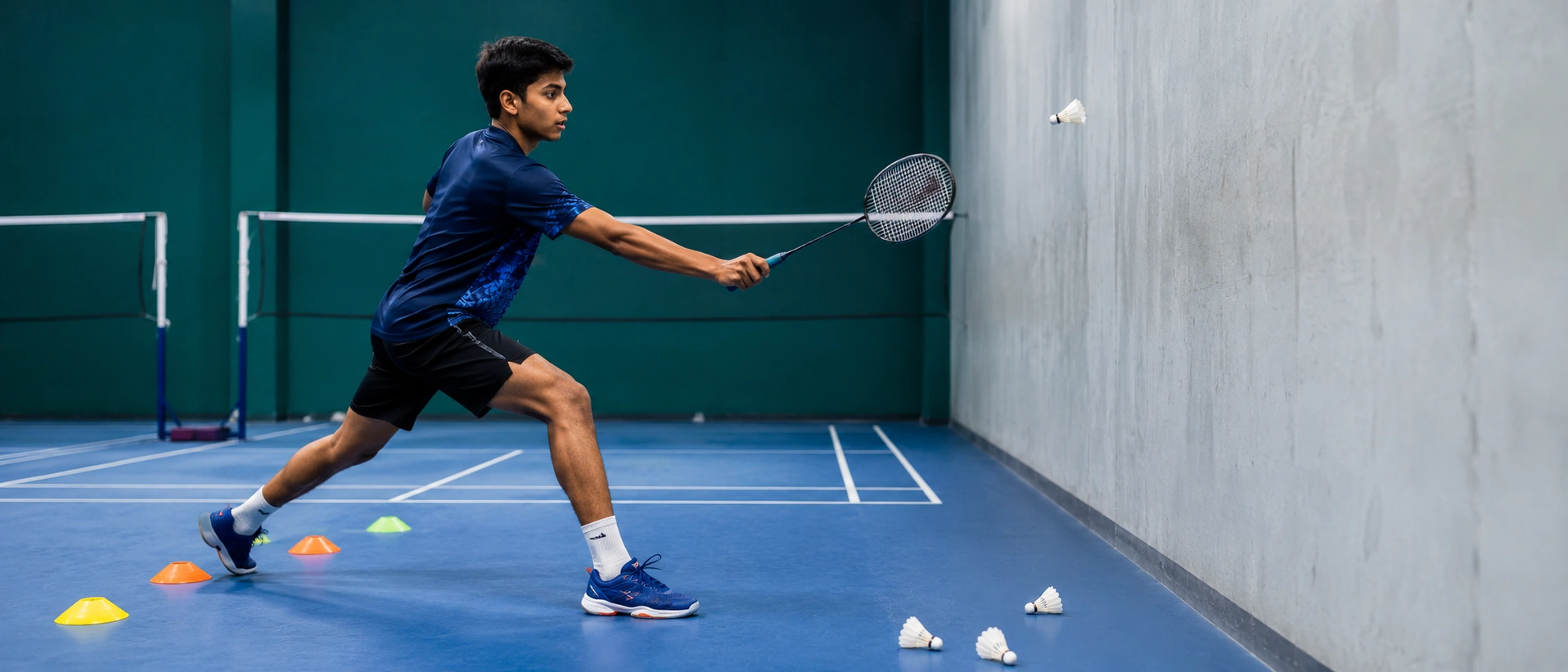
Wall rally is a simple drill that can be done at home or in a small space. It improves racket speed, wrist control, timing, and quick response.
How to do it:
- Stand a few feet away from a wall
- Hit the shuttle softly against the wall
- Keep the rally going
- Use forehand and backhand
- Increase speed gradually
- Count how many shots you can return in 60 seconds
This drill is useful for improving fast racket movement, especially for doubles defense and drive rallies.
7. Improve Net Kill Drills and Drive Reflexes
Fast net kills and drive exchanges need sharp reflexes. In doubles, rallies can become very quick, so your racket should always be ready.
Net kill drill:
- Stand near the net
- Ask your partner to feed shuttles slightly above net height
- Tap the shuttle down quickly
- Keep your racket up
- Use a short swing
- Recover after every shot
Drive reflex drill:
- Stand mid-court with a partner
- Hit fast flat drives
- Keep your racket in front
- Avoid big backswing
- Use compact wrist movement
This drill improves quick racket response and helps you handle fast rallies better.
8. Train With Random Direction Signals
Predictable drills are good for beginners, but real matches are unpredictable. That is why random signal drills are important.
How to do it:
- Stand in the center court
- Partner points left, right, front, or back
- Move in that direction quickly
- Return to base
- Repeat for 30 seconds
You can use:
- Hand signals
- Voice commands
- Color cards
- Cone numbers
- Shuttle direction
This trains your brain and body to react together. Visual reaction training has also been studied in badminton, including systems designed to improve badminton footwork performance.
9. Build Lower Body Strength
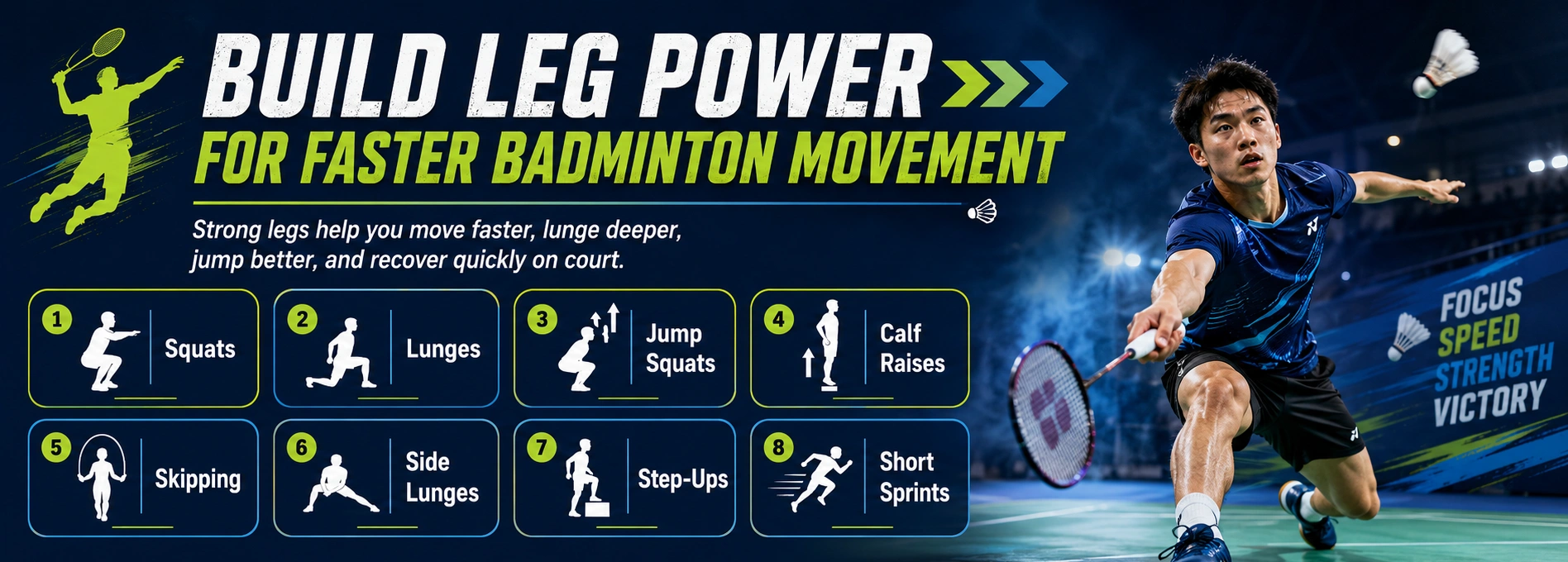
Badminton speed starts from the legs. If your legs are weak, you may react quickly but still move slowly. Strong legs help you push off faster, lunge deeper, jump better, and recover quickly.
Best exercises for badminton speed:
- Squats
- Lunges
- Jump squats
- Calf raises
- Skipping
- Side lunges
- Step-ups
- Short sprints
Do these exercises 2–3 times per week. Keep the form correct. Bad form can increase injury risk.
10. Improve Balance and Body Control
Speed without balance is not useful. If you fall out of position after every shot, you will be late for the next shot.
Balance exercises:
- Single-leg standing
- Lunge hold
- Plank
- Side plank
- Single-leg calf raise
- Landing control drills
- Slow shadow footwork
Research on badminton players has found that adding balance training to a regular training schedule can improve dynamic balance and on-court sport-specific performance.
A pilot study on badminton players in Vadodara also found that footwork exercises showed significant effects on agility and balance.
Quick Badminton Speed Training Plan
Here is a simple weekly plan for beginners and intermediate players.
Day | Focus Area | Training Drills |
Day 1 | Footwork Speed | Split step, shadow footwork, six-corner movement |
Day 2 | Reflex Training | Reaction ball, wall rally, random signal drill |
Day 3 | Match Speed | Multi-shuttle, drive practice, net kill drill |
Day 4 | Strength & Balance | Squats, lunges, skipping, single-leg balance |
Day 5 | Mixed Practice | Footwork + reflex + short match practice |
If you are a beginner, start with 3 days per week. If you already play regularly, you can train 4–5 days per week with proper rest.
20-Minute Daily Routine to Improve Badminton Reflexes
If you have less time, follow this short routine.
- 3 Minutes warm-up: Do jogging, skipping, arm rotation, and light stretching.
- 5 Minutes shadow footwork: Move to all corners with split step and recovery.
- 5 Minutes reaction drill: Use reaction ball, wall rally, or partner signal drill.
- 5 Minutes speed drill: Do multi-shuttle, fast drive rally, or cone movement.
- 2 Minutes cool down: Stretch calves, thighs, shoulders, and lower back.
These short training sessions everyday is better than doing one long training session once a week.
Common Mistakes That Slow Down Your Reflexes
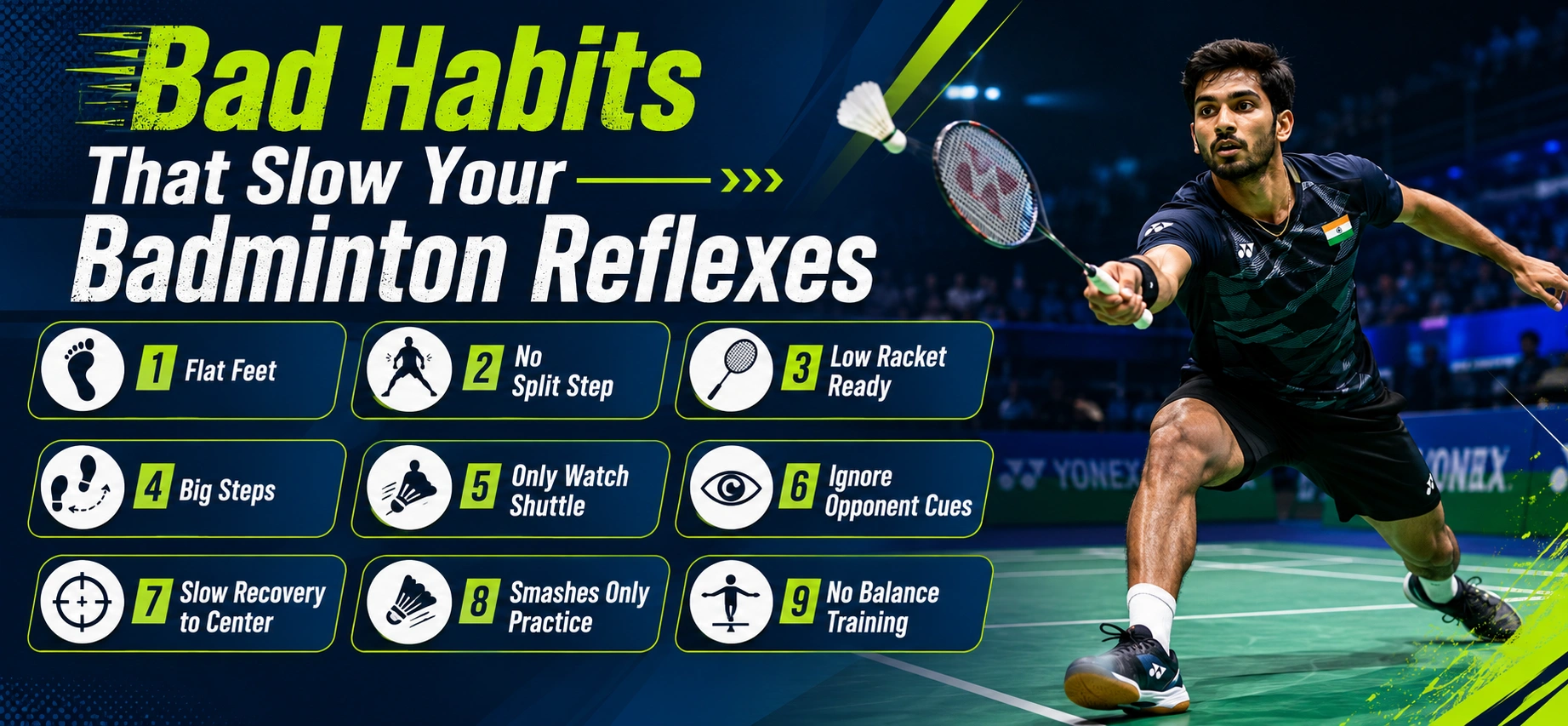
Many players practice hard but still do not improve because they make small mistakes.
Avoid these common mistakes:
- Standing flat-footed
- Not using split step
- Holding the racket too low
- Taking big steps instead of quick steps
- Watching only the shuttle
- Not reading the opponent’s body
- Returning slowly to the center
- Practicing only smashes
- Ignoring balance training
- Training without warm-up
- Overtraining without rest
The goal is not only to become fast. The goal is to move fast, stay balanced, and be ready for the next shot.
How to React Faster to Smashes
Smash defense needs quick reflexes and correct body position.
Use these tips:
- Keep your knees bent
- Stay low in defensive position
- Keep racket in front of your body
- Watch the opponent’s shoulder and racket
- Avoid big backswing
- Use short blocking action
- Practice fast drive and defense drills
- Stay calm during pressure rallies
Do not wait for the shuttle to come close. Read the opponent early and prepare your racket before the smash is hit.
How Long Does It Take to Improve Badminton Reflexes?
You can feel small improvements in 2–4 weeks if you train regularly. However, strong reflexes and court speed take consistent practice for several months.
Your improvement depends on:
- Current fitness level
- Training frequency
- Quality of footwork
- Coaching guidance
- Match practice
- Recovery and sleep
- Strength and balance
For quick improvement, train smart. Focus on short, sharp, high-quality drills instead of long, tired practice sessions.
Final Thoughts
Consistent practice sessions along with the right training methods enable athletes to develop badminton reflexes and speed in a short time. Start with the basics: split step, shadow footwork, six-corner movement, wall rally, reaction ball, and multi-shuttle drills. Then add strength, balance, and match-like random direction training.
Badminton speed requires more than fast running abilities. The process requires you to respond to situations with quickness while executing correct movements and arriving at the shuttle in timely fashion and then repositioning yourself for the next shot. Your regular practice combined with specific drills will lead to better reflexes and footwork and agility and overall performance on the court.