

Every cricketer, from a school kid just learning to hold a bat to a club player grinding for a district spot, has faced the same question: which cricket ground for practice is actually worth joining?
The answer is not as simple as ‘whichever is closest’ or ‘whichever is cheapest’. The quality of your practice environment directly shapes the quality of your game. A bad pitch teaches bad habits. A broken net lane is a safety risk. A ground without experienced coaching is just expensive, unstructured time in the sun.
This guide breaks down 6 must-have features that matter when evaluating a cricket practice facility so you can make an informed decision before you pay fees, sign up, and show up with your kit.
1. Accessibility and location of the cricket ground
Before looking for any other advanced facilities or the basic features of a good cricket ground, what is most important is its accessibility and the location of the cricket ground. Faraway locations often result in long commuting hours, along with traffic situations if the cricket ground is in a tier-1 city like Gurugram.
Always consider:
- Cricket grounds that are well connected to the public transport network
- Have easy availability of the parking
- Can be easily accessible for players and officials
It is often best to look for a good cricket ground for practice sessions that are easily accessible throughout the year, irrespective of weather conditions.
2. Look for pitch quality: It must be good enough for practice
The pitch is the heart of any cricket practice ground. It determines the bounce, the pace, the carry, and ultimately — the technical habits you develop as a batter and the confidence you build as a bowler. A bad pitch creates bad habits that are hard to unlearn. Generally, a good cricket ground will have options of both the Turf wicket and Matting wicket for practice.
Turf Wicket vs Matting Wicket — What Is the Difference?
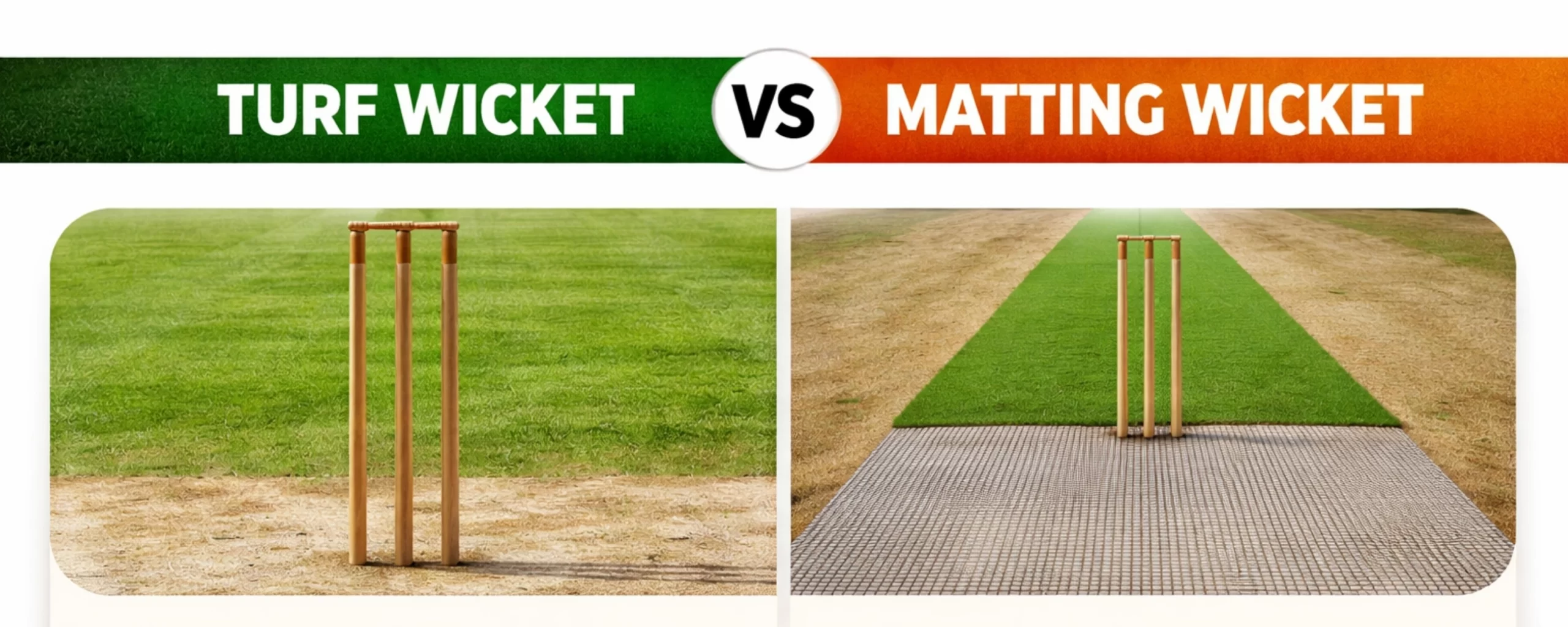
|
Turf Wicket |
Matting Wicket |
|
|
Surface |
Natural soil / red clay |
Rubber, coir, or artificial mat over concrete |
|
Bounce |
Variable — like match conditions |
Consistent but artificial |
|
Pace |
Depends on preparation — can be fast or slow |
Typically even and medium |
|
Best for |
Match simulation, batting technique |
Beginners, budget grounds, bowling line and length |
|
Maintenance |
High — needs rolling, watering, covering |
Low — just clean and replace the mat |
|
Cost |
Higher |
Lower |
|
Ideal user |
Competitive club and district players |
School players, beginners, casual play |
Always check these features while evaluating the pitches
- Even bounce: Balls should not shoot unexpectedly low or fly dangerously from a good length. Uneven bounce means an unprepared pitch
- No cracks or indentations: Deep cracks and footmarks cause damage on pitches that are not in use, yet signal poor maintenance
- How many pitches are maintained: A good cricket ground facility maintains multiple pitches. They keep rotating these pitches, so batters are not always playing on the same worn surface
- Match-simulation quality: Ask if any turf wickets are prepared that resemble the actual match conditions. Competitive players need match-simulative practice and not just batting on slow, dead surfaces
3. Ensure the quality of cricket nets and practice area
The cricket nets practice area is where most of your session time is spent. It is where batters face hundreds of deliveries and where bowlers dial in their line and length. A poorly maintained net setup is frustrating at best and dangerous at worst.
What Good Cricket Nets Should Have
- Sufficient number of lanes: At least 4–6 net lanes for a facility that serves multiple players simultaneously; otherwise, queue times reduce actual practice sessions.
- Proper net height and width: Nets should be tall enough that no ball clears over them, and wide enough that medium-pace or wide deliveries are contained.
- Firm net poles: weak or rusted poles signal poor maintenance and are a safety risk, so avoid them.
- Surface under the nets: Ideally, the same matting or turf as the main pitch — not gravel or concrete that changes foot position and bounce patterns
- Separate bowling run-ups: A good net has adequate space for a fast bowler’s run-up, not a cramped 5-step space that forces everyone to use a short run-up
4. Look for a well-maintained outfield for practice matches
The well-maintained cricket outfield matters more than most players realise when choosing a practice ground. Poor outfields are where injuries happen — and where fielding practice becomes useless or dangerous.
What a Good Outfield Looks Like
- Level and even grass cover: An uneven outfield means unpredictable ball roll and trip hazards during fielding practice
- No hidden obstacles: Stones, broken ground, sprinkler heads, and drainage covers are common outfield injury causes — inspect carefully during a practice visit
- Mowed and maintained: Long grass slows the ball, masks ground irregularities, and attracts insects. A well-maintained outfield is cut regularly during the playing season
- Adequate size: A 40-metre boundary minimum for serious practice — smaller than this does not replicate match conditions for batters or fielders
- Good drainage: Grounds that become waterlogged after rain and remain unplayable for days are poor for consistent practice schedules
For players who mainly use nets, the outfield quality matters most for practice matches, fielding drills, and run-up conditioning. If your ground does not allow practice match play on the main ground, that is a significant limitation for developing match readiness.
Organising a corporate cricket event requires proper planning, team coordination, and the right venue setup. To make your event successful, you can follow this detailed guide on hosting a corporate cricket day in Gurgaon for structured execution and better engagement.
5. Look for good-quality coaching and structured practice sessions
Here is the truth that most players do not factor into their ground selection decision: the best pitch in the city is useless without good coaching. Practice without feedback is just repetition — and repetition of poor technique builds permanent poor habits.
What to Look for in Coaching Quality
- Qualified coaches: Look for BCCI Level 1, Level 2, or Level 3 certified coaches. Former first-class or domestic cricketers as coaches is a strong positive signal
- Structured session plans: Does the ground have a session structure — warm-up, skill drills, net batting, fielding — or is it just open nets with no supervision?
- Individualised feedback: Can coaches provide personalised technical feedback during sessions? A coach who works with 20 players simultaneously without individual feedback is effectively not coaching
- Video analysis: Premium practice grounds offer video analysis tools — slow-motion review of batting or bowling technique is one of the most effective improvement tools available
- Age and level grouping: Are beginners, intermediate, and advanced players grouped separately? A beginner facing club-level pace bowlers in nets is both dangerous and counterproductive
Ask directly: ‘What is the coach-to-player ratio during a session?’ A ratio above 1:15 during active net sessions means individual feedback is nearly impossible. The best academies maintain a 1:8 or lower ratio during technical practice.
6. Must have Support facilities in a good cricket ground
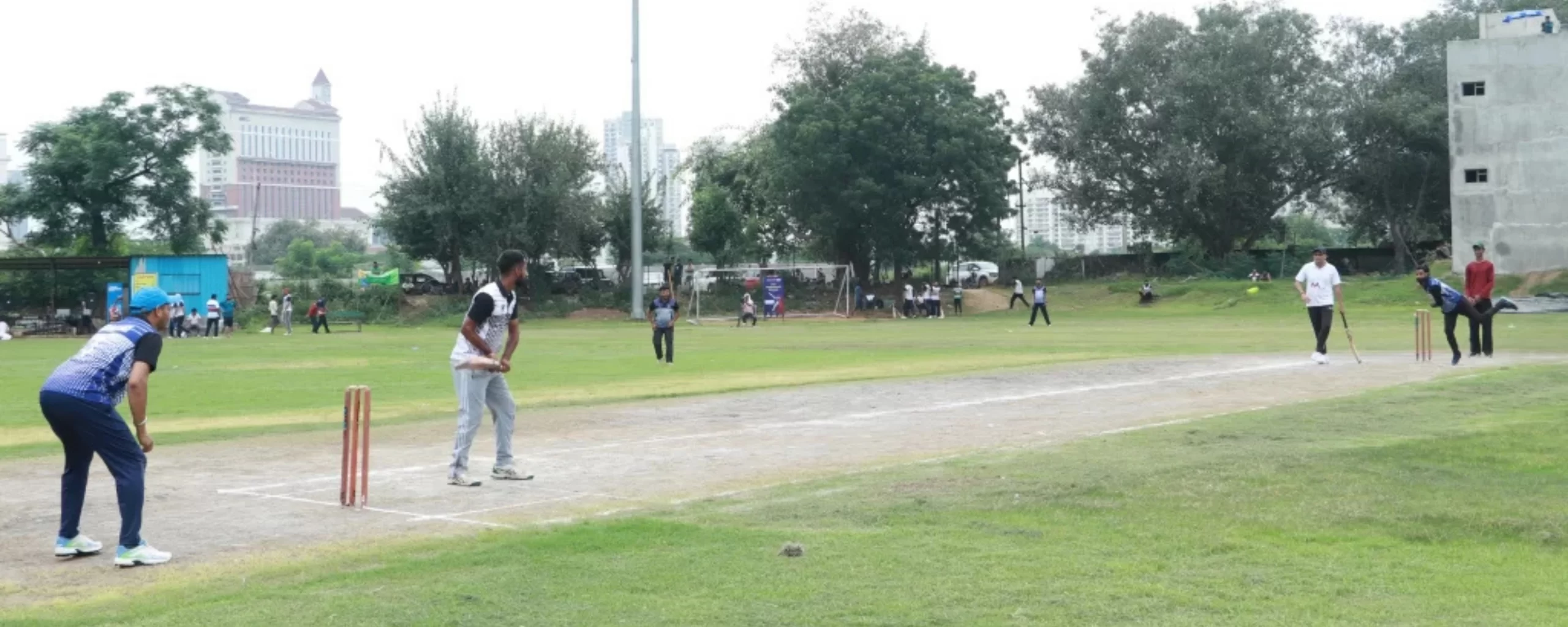
Beyond the pitch and the nets, the ancillary facilities at a practice ground determine how productive and comfortable your sessions actually are — especially for players who practice daily.
Essential Facilities Checklist
- Changing rooms and lockers: A safe space to change and store kit, especially important for school and junior players
- Clean washrooms: Non-negotiable for morning and evening sessions
- Drinking water supply: On-ground access to clean drinking water during sessions, dehydration is a real risk during summer practice in India
- First aid availability: A basic first aid kit and a staff member trained to use it. Injuries in cricket are common, especially in nets
- Equipment lending: Some grounds provide helmets, gloves, and pads — reducing the kit burden for newer players
- Covered practice space: For rain or extreme afternoon sun, a covered net area allows sessions to continue regardless of weather
- Parking: Underestimated but important, especially for parents dropping off school-age players
Best Facilities That Indicate a Serious Academy
- Video analysis lab or recording setup at the net ends
- Bowling machines with variable pace and spin settings
- Strength and conditioning area (even a basic one)
- Dedicated fielding practice space with throwing targets and catching equipment
- Match scorecard and data tracking for net and practice match performances
A Complete Cricket Practice Ground Checklist
Before you sign up at any cricket practice facility, use this checklist. This checklist helps you prioritise the most important features that can’t be ignored. Tick every box that the ground meets during your visit:
|
Feature |
What to Ask / Check |
Priority Level |
|
Pitch quality |
Turf or matting? How many pitches? How often prepared? |
High |
|
Net lanes |
How many lanes? Max players per lane? Net condition? |
High |
|
Outfield condition |
Level? Well-mowed? Drainage? Stones or obstacles? |
High |
|
Coaching quality |
BCCI certified? Coach-to-player ratio? Session structure? |
High |
|
Changing rooms |
Secure lockers? Clean washrooms? |
High |
|
Water and first aid |
On-ground water? First aid kit present? |
High |
|
Practice match opportunity |
Separate sessions for different skill levels? |
High |
|
Fees and contract |
Monthly or per-session? Trial session available? |
High |
Pro Tips Before You Join a Cricket Practice Ground
Tip 1: Always visit the cricket ground during a Live Session to analyse the ground situations and live conditions.
Tip 2: Ask for a Trial Session Before Paying Fees. This will be beneficial in case you’re not satisfied with practice sessions.
Tip 3: Match the Ground to Your Current Level of Training. Check whether the cricket ground can offer you an advanced level of training facilities.
Tip 4: Check the Pitch Before You Bat because a cracked and uneven matting surface can result in injury.
Tip 5: Enquire about the Match Play Opportunities provided by the cricket ground facility.
Improving bowling speed requires the right mix of strength, technique, and recovery. Players should follow structured training methods like these top tips and exercises to improve bowling speed and prevent injuries to boost performance safely.
Final Takeaways
- Pitch quality is the most important feature of a cricket practice ground — turf wickets provide match simulation; matting is fine for fundamentals but has limitations for competitive development.
- Cricket net practice area quality — number of lanes, net condition, surface, and run-up space — directly determines how much productive batting and bowling time you get per session.
- A qualified, BCCI-certified coach with a manageable player-to-coach ratio is more valuable than the fanciest facilities without structured, individual technical feedback.
- Always visit during a live session and request a trial before paying any fees — the real quality of coaching, net management, and session structure is only visible when the ground is actually in operation.
- Match the ground to your level: beginners need fundamentals and safety; intermediate players need structure and match play; advanced players need turf wickets, video analysis, and competition access.