
Sports injuries don’t just happen to “professional athletes.” In India, injuries are common across school tournaments, local football leagues, cricket nets, badminton courts, running tracks, and academy training, often because of rushed warm-ups, poor technique, overtraining, or playing on uneven surfaces.
To prevent sports injuries, warm up properly, build strength and stability, increase training load gradually, prioritize recovery (sleep + hydration), use the right footwear/gear, and act early when pain starts. This guide breaks it down into simple, proven steps for players and coaches.
Why Sports Injury Prevention Matters for Athletes
Injury prevention is not only about avoiding pain, but it’s also about playing consistently, improving performance, and protecting your long-term health. A minor injury can quickly turn into a long break if you keep pushing without care.
Common injury causes
- Skipping warm-up and cool-down due to time pressure
- Overtraining during tournament seasons or trials
- Incorrect technique (running form, landing, throwing, bowling)
- Poor footwear or no protective gear
- Uneven grounds, hard turf, and unpredictable weather
- Training fatigue + poor sleep (exams + practice combo is real)
Most sports injuries are preventable when athletes manage training load, improve movement quality, strengthen supporting muscles, and recover well.
Common Sports Injuries: What Players and Coaches Should Watch For
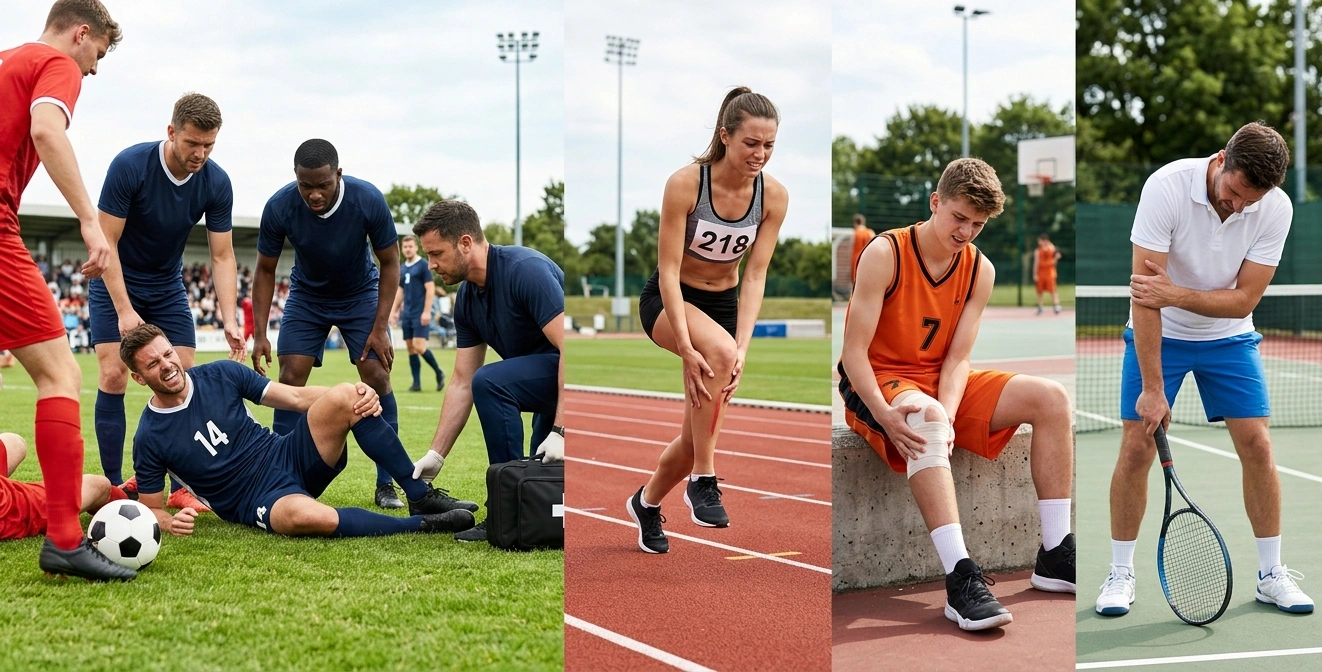
Understanding injury patterns and types helps you stop problems early before they become serious. The two types of injuries, acute and overuse injuries, show a clear distinction through their fundamental characteristics.
- Acute Injuries: happen suddenly: ankle sprains, muscle pulls, collisions, and fractures.
- Overuse injuries: develop through time to produce knee pain, shin splints, shoulder strain, tennis elbow, and back pain.
You should not ignore these early warning signs, which indicate potential danger. Pain that increases during play (not decreasing after warm-up). The body shows swelling, redness, and tenderness at one specific location. The person exhibits limping and a loss of range of motion and experiences an unstable sensation.
Coach note: Pain patterns serve as valuable data. Begin tracking these patterns at the beginning instead of continuing with your normal activities.
How Can Sports Injuries Be Prevented?
Sports injuries can often be prevented by warming up properly, using the right technique, wearing suitable sports gear, increasing training gradually, staying hydrated, taking enough rest, and paying attention to pain before it becomes a bigger problem.
1. Warm-Up the Right Way: Your First Line of Injury Prevention
The initial step for preventing injuries requires you to perform warm-up exercises correctly. The warm-up process establishes better movement capacity through its effects on muscles, joints, and the nervous system.
The warm-up process decreases body stiffness while increasing coordination abilities, which leads to improved reaction times and decreased risk of sustaining injuries through unexpected movements. The proper pre-game preparation requires athletes to choose dynamic warm-ups that involve physical activity.
The athletes should perform static stretches after their training session to aid in their body recovery through sustained stretches. The beginner-friendly warm-up requires eight to twelve minutes of exercise time. The following sports routine needs to start with this basic routine, which activates all body systems.
- Light cardio (2 minutes): jog, skipping, brisk movement
- Joint mobility (2 minutes): ankle circles, hip circles, arm swings
- Dynamic stretches (3 minutes): leg swings, lunges, inchworms
- Activation (2 minutes): glute bridges, high knees, butt kicks
- Sport prep (1–3 minutes): short sprints, side shuffles, shadow practice
2. Use the Right Training Technique and Form
The Right technique plays an important role in the prevention of injury. Poor technique is a common reason why players develop sports injuries. Even a talented athlete can get hurt if movements are repeated in the wrong way.
How Wrong Form Leads to Injury: Incorrect running style, poor landing mechanics, bad lifting posture, or improper throwing action can put extra stress on muscles, joints, and ligaments. Over time, this stress builds up and leads to pain or injury.
For example:
- A football player landing badly after a jump may hurt the ankle
- A cricketer bowling with poor action may stress the shoulder or back
- A gym-based athlete lifting without form may strain the knee or lower back
Why Coaching Matters: Good coaching helps players learn proper movement early. Beginners should focus on technique first, not just intensity or speed. A strong basic foundation reduces the risk of injury later.
Focus on Controlled Practice: Players should avoid rushing into advanced drills without mastering the basics. Clean, controlled movement is safer than fast but unstable movement.
3. Strength, Mobility, and Stability: Build an Injury-Resistant Body
Strong muscles protect joints. Mobility helps you move efficiently. Stability prevents awkward collapse during landing, cutting, or quick turns.
Develop strength, flexibility, and endurance through gradual progression. Athletes who attempt high-intensity workouts before their bodies achieve proper fitness levels experience multiple injuries.
The body requires sufficient time to establish its capacity for handling new exercise demands.
-
Why Overtraining Increases Risk – Athletes who suddenly boost their running distance, practice time, and gym workouts, and match performance levels, experience fatigue, muscle pain, and injuries. Muscles and joints need time to get stronger.
-
Follow a Gradual Training Plan – Athletes should increase their training volume through gradual progression. This process enables the body to adapt to three different training elements, which include: higher intensity, longer duration, more frequent practice, and new movement patterns.
-
Strength Training Supports Injury Prevention -Strength training helps support joints and improve body control. Strong muscles help protect the knees, hips, shoulders, and back during sports.
Useful areas to strengthen include:
Flexibility and balance training provide equal importance to athletic performance. A body that is strong but too tight may still be at risk of injury. Basic stretching exercises, mobility training, and balance exercises lead to better movement performance and reduced physical strain.
4. Recovery, Rest, and Sleep Are Part of Safe Training
Many players underestimate the role of recovery. They think more training always means better results. But without rest, the body cannot repair itself properly.
Why Recovery Is Important?
The process of training puts stress on both muscles and joints. The process of recovery enables the body to heal from stress and emerge with greater strength. The body requires sufficient recovery time because failure to do so results in increased fatigue and higher chances of sustaining injuries.
Signs You May Need More Rest: The body shows common warning signs through three main indicators. The first sign of danger occurs when people experience
-
constant soreness
-
reduced performance
-
poor focus
-
unusual tiredness
-
heavy legs
-
Repeated small aches
-
difficulty sleeping
The body needs to rest when it shows these signs because people will suffer from greater sports injuries. Sleep Helps the Body Recover
Sleep functions as an essential requirement for muscle recovery, energy regulation, and mental concentration. Athletes who experience sleep difficulties will face slower recovery times and increased fatigue during their training sessions.
Rest Days Are Useful, Not Lazy: Rest days represent an essential requirement for every athlete. The body can benefit from light walking, stretching, and active recovery sessions, which help with body movement.
5. Stay Hydrated and Follow Basic Sports Nutrition Habits
Hydration and nutrition play a major role in sports safety. A tired, dehydrated, or poorly nourished body is more likely to perform badly and get injured.
The Importance of Hydration
When the body experiences excessive fluid loss, it becomes difficult for people to sustain their physical energy, and their ability to control their muscles, and their ability to concentrate.
The condition will lead to an increased risk of developing cramps and experiencing dizziness, having trouble with body coordination, and suffering from heat-related stress.
Basic Hydration Tips
-
Players should drink water before they start their training session.
-
Players should take small sips of water during their extended training sessions or their most demanding workouts.
-
Players should restore their body fluids after their training session.
-
Athletes need to exercise special care during their summer sports activities.
Nutrition Provides Support to Muscle Development
-
The body needs balanced meals to support strength, energy, and recovery. Proper nutrition enables muscles to function effectively while healing from physical activities.
-
Athletes Should Adopt Beneficial Food Behaviors, which include eating protein-rich foods at every meal, which will help their bodies build strength through blood and muscle development.
- Consume fresh fruits and healthy snacks between meals.
-
Avoid consumption of junk food as a sole dietary choice, together with the practice of skipping meals.
6. Know When to Stop, Rest, and Seek Medical Attention
Many athletes try to “play through pain,” especially during important matches or intense training periods. But ignoring pain can make a small issue much worse.
-
Normal Soreness vs Injury Pain – It is normal to feel some muscle fatigue after training. But sharp pain, swelling, weakness, or difficulty moving is different.
-
Warning Signs You Should Not Ignore –Your body gives you warning signs for when to stop. Seek proper guidance if you notice:\
- swelling around a joint
- sharp or sudden pain
- pain that gets worse with movement
- inability to run, jump, or lift properly
- Repeated pain in the same area
- numbness or instability
Early Attention Can Prevent Bigger Problems
A minor pain treated early may heal faster. If ignored, it can become a longer-term injury that affects months of training.
Players should not hesitate to consult a doctor, physiotherapist, or sports injury specialist when needed.
Safe Training Tips for Players
Different athletes need different levels of support, but basic injury prevention principles apply to everyone.
-
For Children and School Players: Young athletes require age-appropriate coaching, together with supervised training and sufficient rest periods. Parents should understand the Importance of Early Age Sports Training for Child Development. Also, the young athletes should avoid training beyond their body development limits.
-
For Sports Academies: Sports academies should develop safe training systems that include proper warm-up routines, coach supervision, equipment checks, hydration breaks, workload control, and recovery awareness.
-
For Competitive Athletes: Higher-level players need to train harder and more often, which makes injury prevention even more critical. Their training program must consist of strength development and recovery strategies, mobility improvement activities, and ongoing assessment of their pain and fatigue levels.
-
Role of Parents and Coaches: Parents, together with coaches, need to motivate players to report their pain symptoms as soon as they start instead of hiding them. Common Mistakes Parents Make When Choosing a Sports Academy should be avoided because a safe sports environment enables athletes to perform better while protecting their health for the future.
What to Do When Pain Starts: First Aid, Rest, and When to See a Doctor
Injury prevention also means acting early.
Muscle soreness vs injury pain
- Normal soreness: dull, spread out, improves as you warm up
- Injury pain: sharp, specific point, worsens with movement, may involve swelling
Immediate steps when pain begins: Stop and assess (don’t push through sharp pain), Protect the area (avoid load), Use rest + gentle movement (depending on injury), and Monitor swelling and function.
R.I.C.E. basics:
- Rest: avoid painful movement
- Ice: short sessions to reduce swelling (if it helps)
- Compression: light support if swelling
- Elevation: Raise the area if swelling is present
When to consult a physiotherapist/doctor
- Severe swelling or visible deformity
- Numbness/tingling
- You can’t bear weight
- Pain doesn’t improve in 48–72 hours
- Recurring pain that returns every week
Coach tip: Encourage athletes to report pain early. Hiding injuries ruins seasons.
Conclusion
The process of preventing sports injuries involves more than just protecting athletes
from physical discomfort. The process consists of three elements, which include maintaining
Athletes can reduce their risk of sports injuries through basic practices, which include warming up, utilizing proper techniques, putting on appropriate equipment, taking sufficient breaks, and monitoring their physical condition.